Roll Call......
Join us as we present features, interviews and pictures of some of the wonderful cast and crew from The Phil Silvers Show...
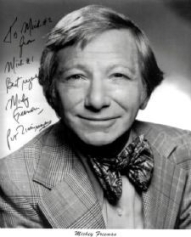
Mickey Freeman
First up in the Roll Call is Mickey Freeman who played Private Fielding Zimmerman. Enjoy this fascinating interview with the man who played one of the shows most popular characters...
Mickey, as Pvt. Fielding Zimmerman you became one of the shows most popular characters. What are your memories of working on the show?
"The pride of being on a show that was not the usual sit-com. When it showed on a Tuesday night you knew that the next day people would keep talking about 'last night's show'. Seeing those brilliant scripts come to life was a new thrill every week!."
We've often heard that Nat Hiken was inspired by people, such as Maurice Gosfield, to specifically create parts to fit the faces. Did he create Fielding Zimmerman for you?
"Nat didn't create Fielding Zimmerman for me, but after the third show our names were sort of assigned to us. Maurice Brenner (Flesichman) was actually called Doberman for a couple of shows."
Did you know or work with any of the cast before "Sgt.Bilko"?
"Billy Sands (Paparelli) was a friend of mine and I knew Herbie Faye (Fender) from the Catskills - but nobody else."
Did the thought of working alongside Phil Silvers inspire you and what were your thoughts on him as a comedian?
"I certainly admired Phil Silvers. I thought of him as the best book comic in show business. As an actor you hardly get inspired - you do your thing and try to do it the best you can."
Phil often stated that working on the show was like being part of one big happy family. Would you say that was true?
"On the set yes, we were one big happy family. Phil hardly mixed socially - he was always busy with lines and things for the show. Paul Ford (Col.Hall), Harvey Lembeck (Barbella) and Allan Melvin (Henshaw) and I saw a lot of each other socially."
Were you ever allowed to throw in ad-libs on set?
"There is no ad-libbing in television - a thirty minute show had three one-minute commercial breaks - that left about twenty seven minutes. Sometimes we would think of a line. I would tell Nat Hiken and he might say "We'll use it!" but there was no just doing a line off the top of your head without clearing it first!"
At the end of the first season Harry Clark (Sowici) passed away. Presumably this came as a shock?
"Harry Clark's death was a great shock since he died during a lunch break playing 4-wall handball."
Why didn't Ned Glass (Pendleton) return for a second season?
"Ned didn't come back because he was anxious to return to his lovely home in California!"
In 1956 Phil played some live shows in Las Vegas with some of the Bilko cast. Can you expand on this?
"Phil appeared at the SAHARA HOTEL. He was joined by Doberman, Fender, Paparelli and Henshaw. He was a big hit artistically and an even bigger hit with the casinos where he spent a lot of money."
In the years following the shows cancellation did you have any contact with Phil?
"I would meet Phil every so often at Sands, the famous restaurant in Shubert Alley. Then I visited him backstage at DO RE MI. I spoke to him in California after he became ill but I never got to see him in person again."
After all these years how does it feel to be a part of such a classic television milestone?
"It gives you a great feeling of achievement when, all these years later, people still know me as Fielding Zimmerman."
Do you have on particular memory of working on the show?
"The night of the Emmy Awards Dinner when we received 5 Emmys. Great night!"
Do you have a personal favourite episode of The Phil Silvers Show?
"My favourite episodes...Empty Store, The Twitch, Doberman's Sister and Court-Martial!"
And what happened for you after the show was cancelled?
"I have never stopped working as a stand-up comic. I wrote some shows for McHALES NAVY, I've done live theatre, after dinner speaking..I've worked the cruise ships and in the process got to see some beautiful places and met some wonderful people! Not bad for a little guy with one joke!"
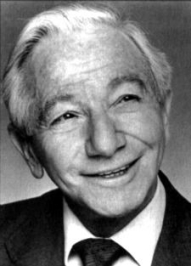
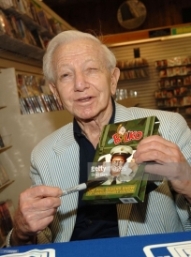
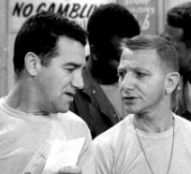
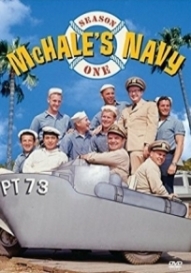
Nick Saunders
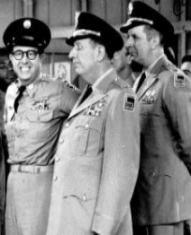
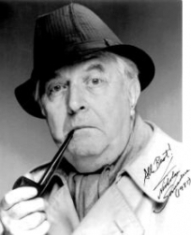
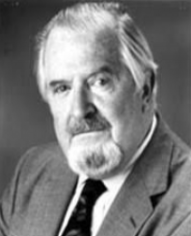
As Captain Barker, Nick Saunders appeared in nearly 50 episodes of The Phil Silvers Show. As Colonel Hall’s right-hand man he was always ready to help thwart Ernie Bilko’s larcenous schemes. Of course for the most part he was battling against impossible odds however, on the odd occasion, he emerged triumphant over Bilko. Witness the finale of The Rest Cure when Barker actually turns the tables on Bilko.
Nick was born Nikita Soussanin in Kiev in 1913. As a young man he developed an interest in theatre. After learning his craft in stock theatre the natural progression was to progress to legitimate theatre. In 1955 he auditioned for The Phil Silvers Show and he was cast as Captain Barker and spent four happy years acting as Colonel Hall’s right-hand man.
After the show was cancelled Nick returned to his theatre roots, appearing in numerous off-Broadway plays. It was also at this time that Nick carved out a successful career as one of the most prolific translators and adapators of Chekov plays, his adaptations appearing on both Broadway and in the West End.
By the 1950’s Nick was working regularly in television on such show as Kraft Television Theatre and Philco Television Playhouse. From 1950 to 1952 he played the role of Detective Sgt.Ross in Martin Kane – Private Eye.Occasionally he appeared on TV most notably in The Jackie Gleason Show – (1966) and in All My Children – (1970). He also made appearances in films such as Fail Safe – (1962), Bananas – (1973), Paradise Alley – (1978) and Arthur– (1981). Sadly Nick passed away in August 2006.
The following story was related to The British PHIL SILVERS Appreciation Society in November 2000.
"I have a memory you know, of THE PHIL SILVERS SHOW, which was called "Camp Paradise" Supposedly Phil Silvers, Bilko, always got away with everything. Nat Hiken came over to me and said "Look, this time we're gonna change the ending!" This was just at dress rehearsal. " You go into a sound just like a rooster. See what you can do because the Colonel is going to do his little dog imitations..." You know the sort of thing that Phil Silvers did as Bilko...he (Bilko) said that they were coming over from the Ed Sullivan Show you see, in order to have him (Col.Hall) do his dog imitations. So I said "Fine, I'll do that!" So the Colonel did his little dog imitations and then I went into my rooster. After I finished it, the Colonel took away the skis from Bilko and said "I think Captain Barker needs these more than you do!"
Now my little story is the fact that I was born in Russia and when I came over here as a 9-year old boy I didn't speak a word of English. English is an acquired tongue and the only rooster I ever knew before I came here was a Russian rooster. So here I was doing a Russian rooster. Nat Hiken came over and said "Everything was fine, your timing, the way you looked.....just work on that rooster a little bit." And I said "Work on that rooster? What do you mean?" and then I realised that I was saying "KUKA-DE-KU, KUKA-DE-KU!" - a Russian rooster instead of "COCK-A-DOODLE-DO"!
Nicholas Saunders
November 2000
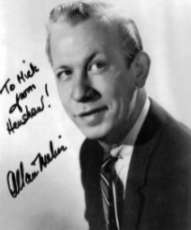
Allan Melvin
Allan Melvin is perhaps best known as Cpl.Steve Henshaw in "The Phil Silvers Show". Allan was a multi-talented actor and gifted impressionist and went on to carve out a hugely successful career in television and as a voice-artist for Hanna Barbera Studios. He was the voice of Magilla Gorilla, Bluto (Popeye's arch enemy) and Drooper in the hugely popular The Banana Splits. Sadly Allan passed away in 2008.
Allan, how did your involvement with "The Phil Silvers Show" begin?
"I was doing a play called 'STALAG 17'. Nat Hiken and Phil Silvers came to see the show and liked a couple of the characters. I was one of those characters. I was asked to audition. I walked into the audition and saw this huge line of people and decided I wasn't going to wait. I went out and it was raining so I thought I might as well wait. We chatted and they said they'd be happy to have me on the show!"
Many of the cast didn't actually audition for the actual roles in which they were eventually cast. Was this the case for you?
"I auditioned for the part later played by Fred Gwynne (Ed Honnergan). When we started rehearsal I saw that I was now Corporal Henshaw when I'd actually auditioned for a leading part."
Did this cause any problems for you with Nat or Phil?
"I went to see Nat and he said "It's OK Allen, you'll like this a lot better!". From then on I was in all the shows so I was happy to do it!"
Did you have any reservations about being part of such a large ensemble cast?
"I think all the characters were so well-defined. That was part of Nat's genius. He felt every integral part of the show was important. For Nat it wasn't just the star and a bunch of supporting characters. He felt everybody contributed something and it reflected in the success of the show!"
Rocco and Henshaw were written almost as if they were the two halves of Bilko's conscience, they were not simply comic foils. Would you say that was true?
"It was a physical thing that appealed to Nat. Also when one was away the other could work, keep the ball up in the air!"
The show always exudes a sense of excitement, energy and great fun. Was this evident on-set too?
"We were all having great fun. We would play cards a lot. We started with an audience but that bothered Phil greatly. So we got rid of them. Phil wanted to shoot it like a movie. He had a real talent for keeping the tempo going so it didn't bother us about not having a live audience. It gave us the chance to come up with bits of fun you know!"
Did you all socialise outside of work?
"I would often meet with Mickey Freeman, Harvey Lembeck...we'd take the wives out dinner and so forth. Phil was sort of a loner, probably he had his own circle of friends outside of the show. I had dinner with him on several occasions. That was the extent of it."
Other than Phil, did any of the cast have any input into their characters?
"Not really. It was Nat's baby and his concept of the show and the way it should go was was very strong from the very start. It always worked and his notions always seemed to pay off!"
What are your lasting memories of Phil?
"I've always had tremendous respect for Phil. He came up the hard way, through Burlesque and Vaudeville. He was a top-notch sketch comic. There are very few around who could match his wit, his flexibility and his ability to ad-lib!"
How did the cast take the news when they heard the show was being cancelled?
"It was kind of a shock to all of us because it was still a ratings success. But I guess it's about business and the powers that be wanted to get the show into syndication!"
After the show was cancelled you obviously continued to act...
"Sure. I did TV...things like Archie Bunker, Jackie Gleason, Gomer Pyle. I also did a lot of voice-overs for Hanna Barbera. I played Bluto in Popeye. For me voice-over is easy, you just pick up the script, read the words and do the voice. I do a lot of work with guys who are all voice-people. It's a lark!"
How does it feel now, to look back on such a long and varied career?
"I've met some wonderful people, had a lot of fun....and made some money!"
Leonard Stern
Leonard Stern is a hugely successful television writer. His credits include "THE HONEYMOONERS", "THE PHIL SILVERS SHOW", "THE STEVE ALLEN SHOW" and "GET SMART". He has also worked as a publisher, firstly with Price/Stern/Sloan and most recently with Tallfellow and Smallfellow Press. The following interview was given to the society in 1986.
Who initially approached you with the proposition of working on the show?
Nat Hiken had created another show "The Great Montague", and was desirous of shepherding it through its early years. In order to do this, he had to find his replacement on 'BILKO'. He chose me. Working together for six months, Nat and I arrived at the same conclusion. He was irreplaceable on 'BILKO'.
Can you describe for us how the show scripts came together?
Although all the writers' names appear on each episode, we did not write in concert. Scripts were written by teams. I collaborated with Tony Webster. We would develop a story-line, check with Nat, decide on what stayed and what went and then go off and write a first draft. We would meet again (usually very early in the morning, before Nat went on the set to oversee the shooting of an episode) and discuss changes for the final version.
Who would give the OK to the final draft?
The final script was never final. Nat would always do a polish. Additional revisions were made by Nat and Phil as the show rehearsed. There was seldom a major rewrite on the set, but some of the changes were more that bite-size!
How did Nat strike you as a man...I mean was his genius very much in evidence as part of his character or did it shine through his writing?
Better than he would strike me as a woman. Actually Nat was a paradox. At work he was of singular purpose, somewhat dictatorial and superbly creative. In life he was unassuming and low-key.
How often were your required to be on set?
As the potential Hiken heir, I did spend a lot of time on the set, but my rewrite contributions were minimal. Writing in the office was round-the-clock job!
Phil said the BILKO team was a 'happy family'. Did that feeling spill over to the crew?
Yes it did. Ruckus and rebellion were kept to a minimum. A sense of fun and camaraderie prevailed. Unfortunately these ingredients are noticeably absent in the behind-the-scenes operation of most of today's comedy programs.
During your time on the show you contributed to some classic episodes. On reflection, how do you feel about having worked on the show?
After four years of working on 'THE HONEYMOONERS' I thought I knew everything about comedy writing. A week in the company of Nat Hiken and I trashed that idea along with my very first script. Nat and Phil knew television comedy was a popular, rather than a fine art, but they never any concessions to this realisation. They insisted on the development of stories and characters that gave an insight and perspective on what it means to be a human being. To put it another way, the 'BILKO' show always had meaningful subtext underlining the jokes.
Compared to today's sitcoms, how would you rate 'THE PHIL SILVERS SHOW'?
I do think 'THE PHIL SILVERS SHOW' ranks among the ten best comedies ever presented on television. The many revivals and the renewed critical acclaim 'BILKO' receives each time it is rerun lends support to what might be thought by some 'malcontents' and 'dyspeptics' as a self-servicing statement.
Why did you leave the show?
Nat was ambivalent about turning over his responsibilities on 'BILKO.' He epitomized that old Durante song - 'Did You Ever Get The Feeling You Wanted To Stay, Did You Ever Get The Feeling You Wanted To Go'. When the opportunity to direct, head-write and determine the direction of the new 'STEVE ALLEN SUNDAY NIGHT SHOW' presented itself I went 'past go.' I told Nat long before Mario Puzo immortalized the phrase "It was an offer I couldn't refuse". Nat agreed with me.
Would you say that working on 'THE PHIL SILVERS SHOW' was a great learning experience?
As I said earlier, it was on-the-job-training... the best a writer could have. It taught me to create shows that were thoughtful as well as entertaining... or at least it taught me to try and create shows with these elements.
What was the source of inspiration behind your 'BILKO' scripts?
I don't remember who I'm quoting but "comedy is one per cent inspiration and ninety-nine per cent perspiration".
How much was Phil allowed to tailor the scripts to suit his character?
In Phil's case the word 'allowed' doesn't apply. In addition to his other talents, Phil had improvisational skills. He was expected to make funny and insightful contributions to the script. As for the other cast members, they could of course make suggestions. Whether or not they were incorporated into the scripts was up to Nat or the size of the actor.
Would Phil ever come up with an idea for a script?
Nat and Phil were collaborators. they worked on scripts while playing betting on fights and getting married.
To what extent were you involved with Phil during your time on the show?
We were close. Phil introduced me to my wife, Gloria. I took a Sunday off from writing to marry her. Phil was an usher at the wedding and predictably converted a silent bit into a major role.
Did your relationship continue after you left the show?
It did indeed. I am still in touch with the Silvers family. His girls are friends of my children.
Most of the tabloids over the years have said that BILKO was drawn directly from Phil's own persona. How true would you say that is?
I don't think the show or the BILKO character evolved from Phil's persona as much as it did from the characters he portrayed in his Burlesque and Vaudeville days.
Do you have any memories of the show that stayed with you?
One ineradicable memory... Nat Hiken sitting behind his desk and unconsciously and systematically decimating any packet of cigarettes left on his desk. This was not without a residual and artistic benefit. Nat's deft fingers would twist the cellophane and silver foil into impressive animal sculptures. Mostly giraffes...
Did you work with Phil or any of the cast again after BILKO?
Yes. I did over a dozen series subsequent to BILKO and worked with many of the performers whom I had originally met on the show. Unfortunately, that did not include Phil. there is a simple explanation for that... he wouldn't work cheap!
Why do you think BILKO is still popular today?
Because it's very good and because it's very funny!
How much influence do you think the show has had, not only on todays shows, but also the writers of today?
It has given them a ton of frustration. BILKO is difficult to duplicate or emulate. You have to start off with a Silvers and a Hiken...and unfortunately we are out of those!
Leonard Stern
June 1987
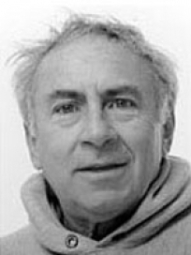
Gerald Hiken
In August 2008 the Society was fortunate enough to forge contact with Nat's cousin Gerald Hiken through something as basic as an online telephone directory! I'd taken a gamble that I'd tracked down the right Hiken and nerves kicked in as I dialled the number. Fright soon turned to pleasure after a brief introduction with his wife Barbara, Gerald came bounding to the phone and positively 'gushed' with stories about Nat and Phil.
He spoke with admiration and love for both men, adored his only appearance on The Phil Silvers Show, which later lead to a steady stream of film, stage and TV work. So without further ado, for your reading pleasure is Gerald Hiken's recollections of working with two of the Greats from the golden era of American comedy.
Phil Silvers and Nat Hiken
Nat Hiken was my cousin and what I remember most from my time spent with him was his quiet humor. When Queen Elizabeth II was having her coronation, I was dining with Nat and his family and I noticed one of his daughters, a young kid about twelve years old, looked very unhappy. She in fact, left the table almost in tears. When I asked about it, Nat replied she was upset because she had not received an invitation to the event in London, something she fully expected! I remember this now because I saw that Nat was not angry with her but rather amused and that he was not laughing at her either, which would be cruel. In fact if anything, he was sympathetic.
This was typical of him. He was never to my knowledge, cruel or mocking, but while he was aware of flaws in anyone, he looked with gentle understanding and humor. For this reason he could create sharp characters like Bilko, who could be portrayed as a conman with no consideration for others, but with Nat showing him as an awkward fumbler who is struggling to survive as best he can, he comes across as actually lovable. He acts out our own child-like fantasies of opportunistic scheming and then meets his failures with a wry grin. And he almost manages to show that he cares for others more than you might suspect.
This also reflects my experience with Phil. I was only in one Bilko show (the sublime 'Bilko's Black Magic') since the season was coming to an end and I was beginning my career in New York. But later I was cast in the musical 'Louie the Louse' with Phil and this is what gave me my chance to learn more about him.
At this time I was performing Chekhov's 'Three Sisters' in a small theater in Greenwich Village. As one of our rehersals was running late, I asked to leave before it was over so I could get to the theater for the performance. As I started to go, Phil asked Nat why I was leaving and Nat told him I was going to 'Three Sisters'. Phil called out to me, 'Say hello for me to Patti, Laverne and Maxine!' Those were the names of a popular singing trio and I thought he was clueless about my world of serious theater, that he was a comedian and nothing more!
I found out how much more he was when we were about to televise the musical and Phil came up to me in the studio and asked why I seemed troubled. I told him I was upset because I had not found the key to sing my solo and Nat would only look disappointed. He had no suggestions but Phil did. He asked me, 'What would Stan say?' I was a blank! I said, 'Stan who?' Phil said, 'Stanislavski.' I was impressed. I didn't think he would know about the Russian whose work in the early 1900's eventually led to modern 'method' acting. I answered, 'He would ask me who I was singing to when I sang my song.' And as soon as I said that, I understood what was missing. I had had no reason to sing a song about the joys of winning a $2 bet on a horse race. (I had only been trying to please Nat) So I made up an image of a mother-in-law who scorned by betting on horses and I could sing my song to her to let her know how much fun it was to win, especially with a $2 bet! When my moment came in front of the camera, I belted it out with gusto!
Phil was standing next to a friend of mine, and when I finished he hugged her and said, 'He got it! He got it!' That was Phil, not only helpful but extremely generous.
I'm sorry I have no more stories but there they are! Thank you for keeping the memory of Phil and Nat alive, and good luck with the Society.
Gerald Hiken
August 2008
A copy of Bilko's Black Magic was sent to Gerald and shortly afterwards the following message arrived:
Dear Steve;
This morning my wife and I watched your DVD. What a pleasure you gave us! Nostalgia used to be for things you remember when they are gone. But, as they say, nostalgia ain't what it used to be. Now we can see me and Phil as we were then. Oh, boy. Thank you so much!
Best wishes,
Gerry Hiken
October 2008
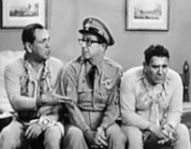
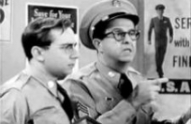
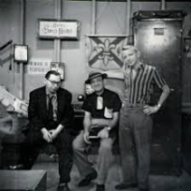
Maurice Brenner
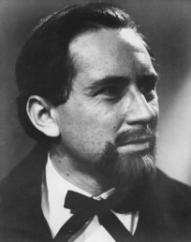
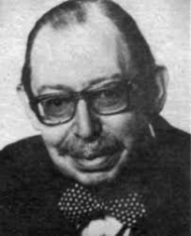
When Maurice Brenner was cast in the pilot episode of a fledgling comedy show called YOU'LL NEVER GET RICH, little did he know that he would become forever immortalized as Pvt. Irving Fleischman! The show eventually became known as THE PHIL SILVERS SHOW and even more popularly as SGT.BILKO!
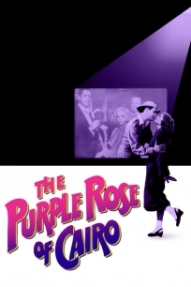
After the show Maurice returned to stage, but also continued to appear on TV and in films, most noticeably in CAR 54, WHERE ARE YOU? and THE DICK VAN DYKE SHOW. In 1985 he appeared in Woody Allen's THE PURPLE ROSE OF CAIRO. Following a lengthy illness Maurice passed away in August 2005.
The following interview was given to the society in 1987!
What do you recall most about working on THE PHIL SILVERS SHOW?
I have wonderful memories of working on the BILKO show...a show I loved doing. It was one of the greatest experiences of my career!
Are you still working as an actor today?
Thankfully yes. I've been doing a musical in Atlantic City. Nowadays I divide my time between live theatre, movies and television.
Would it be fair to say that you look upon the BILKO show as a highlight in your career?
Oh Yes! There was a great rapport between us, combined with the genius of Nat Hiken! One of the saddest things for me is the year by year attrition of our Platoon...
Mickey (Freeman) recalls shooting the pilot and the first few shows without a character name. Was that the case for you?
My recollection is it happened this way...when the pilot was shot I was called Doberman. However, when the series actually began to shoot I was on tour in the Sidney Kingsley play LUNATICS & LOVERS which starred Buddy Hackett (Buddy was cast as Barbella in BILKO but left before filming to star in the play!). While I was away, Maurice Gosfield, who was playing a character in the 'young' platoon called MULRONEY was moved into the part of Doberman....Originally, Nat had a 'young' platoon and an 'old' platoon. Maurice was cast in the 'young' platoon as kind of a joke! Later Nat eliminated the 'young' platoon!
So, you came back to the show as Fleischman?
No. After I came back to the show, I played a character without a name. After the first seven or eight shows Karl Lukas, P J Sydney and I went to Nat to ask for names for our characters. Nat obliged by calling me Zimmerman. This was my name in EATING CONTEST where the Stomach met the Hog! Finally Nat changed my characters' name to Fleischman and Mickey Freeman became Fielding Zimmerman!
Maurice, on behalf of all BILKO/PHIL SILVERS fans everywhere, thank you for taking the time to talk to us!
Thank you for thinking of me. These are of course my own recollections of events in a time that I like to look back upon with the warmest of feelings! My heartfelt congratulations to you and all in your wonderful society!

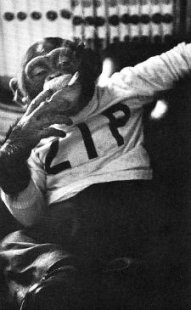
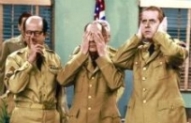
Zippy - aka Private Harry Speakup
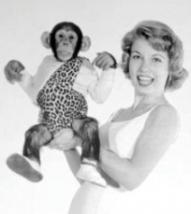
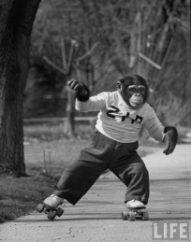
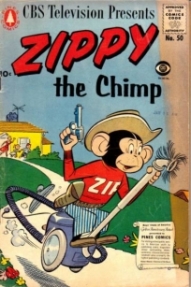
In late 2008 we had the great pleasure of making contact with a woman who had enjoyed an indirect connection with The Phil Silvers Show. Carole Womack was responsible for looking after and training Zippy the Chimp! Zippy was enjoying a flourishing TV career when quite by a quirk of fate he was accidentally inducted into the US Army and right into Bilko's platoon! Zippy of course appeared in THE COURT MARTIAL, cited as one of the best ever episodes and said to be Phil's personal favourite. The breakneck speed of Nat Hiken's script (and one of TV's greatest ad-libs) ensured the show was awarded the honour of 'most (live) laughs recorded in a half hour comedy.' The following e-mail was sent by Carole Womack.
Carole Womack and Zippy
Thank you for your email and kind words about Zippy. Yes, I did get to meet Phil Silvers but it was just an introduction and then to work. You can't believe how fast everything moves when a show is live with a live audience. Mostly I just seemed to get in the way. My job was to receive Zippy after each bit and get him to the start of the next then run to the spot where I was to receive him again.
It was hectic and wild but fun. I spent more time with Nat Hiken. He directed Zippy and I. I had a lot to learn in a very short time, thanks to the Lord I didn't mess up! Please understand that the whole show is done in front of a full, live audience. It is a 30 minute show interrupted by commercials and everything is done as though it were a stage show. Men were scurrying everywhere and, as usual, there was very little rehearsal time for Zippy. Yet Zippy was magnificent!
Zippy never took off when performing a live performance or on a television show except for one delightful time on the Bilko show. He didn't leave the stage or the building, but he left his assigned chair! It may sound like a loss of control, but Zippy only moved from one desk to another. His ad-lib seemed totally appropriate and was the highlight of what Phil Silvers and all the directors and producers considered to be the funniest show Phil ever did!
The last portion of the show was the actual court-martial. Zippy mostly sat at his desk by himself. He was drawing with a pencil and paper and trying to keep his army hat on while the other actors played out the comedy courtroom scene. Suddenly Zippy became tired and pushed his big chair back, swung out of his seat and headed for a prop telephone positioned on a table toward the back of the courtroom. He then picked up the headset, put it to his ear and started spinning its rotary dial.
Phil Silvers played right along with Zippy's improvisation. He turned his body, slowly following Zippy's direction, and when Zippy picked up the phone, Phil struck his own head and exclaimed, 'Oh no! I think he's calling for another lawyer!' It had to be one of the most fabulous ad-libs in television history! Absolutely everyone broke up laughing hysterically with the exception of Phil Silvers (absolute professional that he is) who managed to continue with a straight face. Zippy with a little help, hung up the phone and was taken back to his desk and the court martial continued to its happy conclusion!
As you know The Phil Silvers Show was such a smash hit, that famous actors offered to pay to be on it. It is known that The Court-Martial, The Case of Harry Speakup was considered the best episode of the series.
Thanks for you interest in Zippy. I'm always proud to talk about him!
I remain your friend,
Carole Womack
12 November 2008
For more information on Zippy click on the link below:
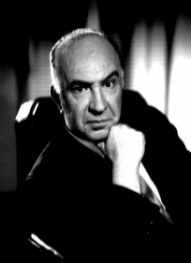
Paul Reed
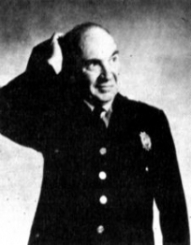
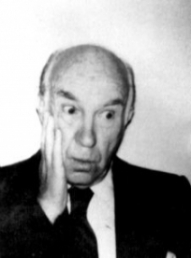
Paul Reed is perhaps best-remembered as Captain Block in Nat Hiken's CAR 54 WHERE ARE YOU?.
Paul started as a performer in the 1920's and in a long and illustrious career appeared in numerous Broadway and Off-Broadway productions including THE MUSIC MAN, HOW TO SUCCEED IN BUSINESS WITHOUT TRYING and PROMISES,PROMISES. A flair for comedy won him a stint on Sid Caesar's CAESAR'S HOUR in 1956.
Paul appeared in two episodes of THE PHIL SILVERS SHOW - BILKO'S VAMPIRE and BILKO AND THE CROSBYS. In 1961 Nat Hiken offered him the part of Captain Block in CAR 54 WHERE ARE YOU? alongside Bilko alumni Fred Gwynne and Joe E Ross (Al Lewis later joined as Leo Shcnauser).
Following CAR 54 Paul had a recurring role in THE DONNA REED SHOW. He also guested in I DREAM OF JEANNIE and THE BEVERLY HILLBILLIES and in 1965 played alongside Fred Gwynne and Al Lewis in an episode of THE MUNSTERS. He continued to work regularly throughout the 1980's and 90's mainly in commercials, radio and theatre. Paul passed away in 2007 at the age of 97.
The following is a letter that Paul wrote in 1987....
It was wonderful to receive your package and I particularly liked the piece on CAR 54 WHERE ARE YOU? Nicholas Saunders (Captain Barker from BILKO) told me all about your society and I think you boys are doing a wonderful job. How I wish I was in England to watch the screenings of CAR 54 WHERE ARE YOU?
Nat Hiken was a very wonderful man, a delightful man, but he was not well you know. When he finished CAR 54 he moved to California but he didn't live too much longer after that. He left a widow - she's still around and he also left a lot of wonderful writings that are still around. His wife has control of those things.
CAR 54 WHERE ARE YOU? was a wonderful show to be involved with and anything or anybody that takes the time to remember it is fine with me! These days, being along in age I do commercials and a little radio and theatre...but at 77 that's all I care to do!
I still see Fred Gwynne and Al Lewis but sadly Joe E Ross is gone. Thank you for writing me. I wish you well in all your endeavours.
Thank you for remembering Captain Block!
Success in all you do...
Your friend
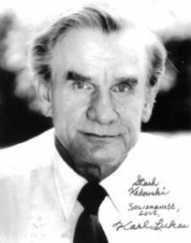
Karl Lukas
Fans of THE PHIL SILVERS SHOW will know Karl Lukas as Pvt. Stash Kadowski. Karl was born Karol Lukasiak in Lowell, Massachusetts in 1919. During the Second World War, Karl served in the United States Navy as a demolition squad instructor. When he left the Navy, Karl decided to pursue his love of acting.
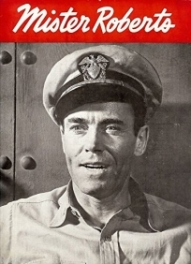
His first major role was as Lindstrom in the Broadway production of MISTER ROBERTS with Henry Fonda. It was here that he met and formed a lasting friendship with Harvey Lembeck.
Over the years Karl appeared in dozens of TV shows including THE LUCY SHOW, BATMAN, GUNSMOKE, BONANZA, QUINCY and worked with some of the great names like Mickey Rooney, Bob Hope and Danny Kaye. Karl narrowly missed out on a major role in George Pal's SHANE when the part went to Jack Palance instead. He appeared sporadically in movies including BLAZING SADDLES, EMPEROR OF THE NORTH and Warren Beatty's REDS. Sadly, Karl passed away in 1995.
The following interview was given to society in 1992.
How did you become an actor?
I had no idea what I wanted to do with my life. Ever since I was a boy I liked seeing plays and going to the movies. I thought I had a feeling for it. Then, when I heard what they paid actors...well I was in like a shot!
Can you recall your first acting job?
My first paying job was in New York City, playing the giant in JACK & THE BEANSTALK. I got an Equity wage and performed in front of hundreds of kids!
How did you wind up on THE PHIL SILVERS SHOW?
I was called in by CBS and Nat Hiken. Nat told me later that he'd seen me in a show we were breaking in called REMAINS TO BE SEEN. He'd also seen some of my live TV work and he thought he could use me!
What are your memories of working on the show?
It was a great time for me. A wonderful show to do and such beautiful memories. The gang affectionately called me NEWSPAPER as I was always reading them. During breaks in filming we held some great poker sessions! There was a lot of camaraderie and we were joking all the time while being thankful that we all had a job!
Is it true that while working on BILKO you had other jobs too?
Yes that's true. When I finished each day on BILKO...I'd head off to work at the Broadway Rooftop Theatre. At midnight I'd head off to Prospect Park Station where I had a job in the change booth! Karol Lukasiak wanted a steady job, but Karl Lukas wanted to be actor...so they compromised. They agreed to cut out sleeping!
Could you describe a typical working week on the show?
We would rehearse on Monday, Tuesday and Wednesday and shoot before a live audience, with three cameras, on Thursday & Friday. It was quite a pressure. I also remember so vividly Phil taking about the script and saying 'Whaddya think of this? Isn't this something?!' We sometimes wouldn't have a finished script til the Wednesday. It was amazing how Nat and Phil worked under pressure...Phil especially because he had the brunt of the lines...but that's the way they worked!
Was there much improvisation during filming?
No, I wouldn't say there was much of that. They would wing-it once in a while but generally speaking they kept to the script. After the audience was dismissed we would have to do the pick-ups.
What was Phil like to work with?
I had nothing but respect for Phil right from the first time I met him and began working with him. Phil was always super with me. I respected him and he respected me. He went out of his way to help me. That's how he was...always looking after the little guy. When I went to audition for a Broadway show he sent me to his music teacher! I was grateful to Phil because he was always trying to help me.
As you look back on your time with the show, what are your thoughts?
As I said...beautiful memories. Because of the writing and the interplay between the different characters and the humour of army life, personally I would rate THE PHIL SILVERS SHOW as being up there with the best of the best!
Are you still acting and do you still enjoy it?
Karl Lukas likes to work let me say! Like most actors serious about their acting I feel I never quite got the parts I was capable of doing. I did several episodes of ST.ELSEWHERE and met a fantastic actor called Denzil Washington. He's a very good actor who I think will achieve great things! I was in a film directed by Henry Winkler called MEMORIES OF ME, with Alan King and Billy Crystal. I worked with the late John Cassavettes and Peter Falk in BIG TROUBLE. I worked with Warren Beatty on REDS. I would've liked to have a had a part with some meat in it...but I'm very grateful I survived in this business. I hope to continue in it till the end of my days! To answer your question...yes I enjoy acting...I just don't enjoy the frustration that goes along with not getting a part!
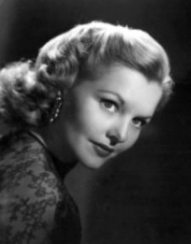
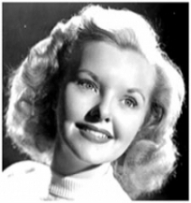
Elisabeth Fraser
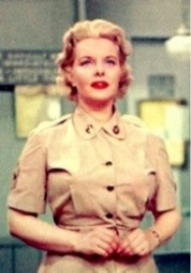
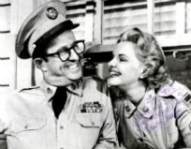
Elisabeth Fraser was born Elisabeth Fraser Jonker on 30 April 1920, in Brooklyn NY. Her career blossomed on Broadway in 1940, six short weeks after leaving high school. Her striking good looks were soon in demand and she carved out a long and successful career playing brassy blondes alongside such stars as Doris Day, Frank Sinatra, Robert Mitchum and Burt Lancaster. However she was most arresting as the long suffering girlfriend of Master Sgt Ernie Bilko, a role she adored playing in the first three seasons of The Phil Silvers Show.
In 1940 Elisabeth was cast in the role of the ingenue in There Shall Be no Night with Alfred Lunt, Joan Fontaine, Montgomery Clift and Sydney Greenstreet. The play scooped the 1940-41 Pulitzer Prize and she was richly rewarded with a contract at Warner Bros. Miss Fraser carved out a busy career on the Broadway stage appearing in The Russian People, The Family, Tunnel of Love and 'The Best Man throughout the 40's, 50's and 60's.
Elisabeth was also in constant demand for dramatic and comedy supporting roles and appeared in over 30 major motion pictures including The Man Who Came to Dinner, Death of a Salesman, Young at Heart, Ask any Girl, Two for the Seesaw, The Graduate and The Way West.
Television also vied for her considerable talents, from early appearances on prestige programmes like Four Star Playhouse and Kraft Theater, she was quickly spotted by Nat Hiken for a new military comedy starring Phil Silvers, making her TV's most popular girl and securing a busy schedule in over 30 other series and specials including Perry Mason, Bewitched, Gunsmoke, Ben Casey, Wagon Train, 77 Sunset Strip, The Defenders, Car 54 Where Are You?, The Man from U.N.C.L.E, The Addams Family, Maude, The Monkees, The Jack Benny Program and Alfred Hitchcock Presents.
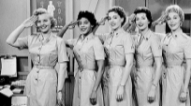
Bilko undoubtedly provided Elisabeth with her most consistant television work. As Sergeant Joan Hogan, the Colonel's secretary at Fort Baxter, she represented an essential alliance for the wisecracking and crafty Sgt! An even match in many respects, warning him in advance of any attempts to use his vehicles for military purposes. As shrewd as Bilko - she knew given the chance he would sell her into slavery, and their relationship was subject to some severe mood swings! But even though Joanie recognised Ernie's schemes for instant riches were doomed to failure, for the most part she could never resist his cheating, conniving and bribing for long!
Her last film appearance was in the 1980 production Nine to Five with Dolly Parton. At the time of release she said, 'It was kinda funny - for two reasons - Dolly reminded me of me!' From that point on Elisabeth retired from the industry and devoted her time to her family. To this day memorabilia from her Broadway, Film and Television career forms part of the permanent collection at the New York Public Library for the Performing Arts in Lincoln Center Plaza.
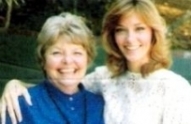
But the story of Miss Fraser's amazing career doesn't end there. After many years of trying to contact Elisabeth, the Society was delighted to receive a letter from Elisabeth's daughter Liza McDonald in 2004. After a brief communciation with Liza who checked our credentials we enjoyed two short, but wonderful telephone conversations. Although it was over 50 years since she had performed with Phil and the boys, she still retained many happy memories of working on the Bilko show. She told us Phil was a quiet guy on set until filming began, but was always a warm, thoughtful and caring guy. 'I adored working alongside Phil, he was a darling'. 'Although he was the star of the show he was always considerate of everyone who worked on the set'. 'Phil was irreplaceable and those 3 years working alongside him are the happiest of my career'.
In 2005 Elisabeth was preparing to work alongside Allan Melvin and Mickey Freeman on the commentary for the 50th Anniversary Bilko DVD release. Sadly Miss Fraser passed away on 5 May before production had been completed. We spoke to her a few weeks before and she told us how much she was looking forward to rekindling those happy memories of life at Fort Baxter. It was such a great honour and privilege to be able to speak with such a lovely and amazing lady about her life, career and especially keeping that rascally Ernie Bilko in line...!
God Bless, you are always in our thoughts.
Steve & Mick
August 2009
Edward J Montagne
Edward J Montagne, producer of The Phil Silvers Show, enjoyed a lengthy and distinguished career as a producer and director of a body of films and television series which helped to develop and shape today's industry.
Edward was born in Brooklyn in May 1912 (just one year after Phil himself). His father, also called Edward J Montagne, had worked for Thomas A Edison's film company during the birth of the Hollywood film industry. During the war Edward served as a combat photographer and was stationed in Europe. In 1946 he joined the RKO-Pathe documentary unit.
He entered the world of television in 1949 and spent 5 years developing his craft as a director on a series called Man Against Crime which starred Ralph Bellamy. In 1950 he made his feature film debut with The Tattooed Stranger, a dark film-noir drama starring John Miles.
In 1955 he was offered the role of production manager, and later, producer on The Phil Silvers Show and stayed on board for all four seasons. He also produced the live, rarely seen special, Keep In Step.
In the early 1960's he went on to produce the Bilko-influenced McHale's Navy which starred Ernest Borgnine as Lieutenant Quinton McHale. McHale was the naval equivalent of Bilko. Some of the old Bilko crew wound up on board including Billy Sands and Bob Hastings. Mickey (Pvt. Zimmerman) Freeman served as a scriptwriter.
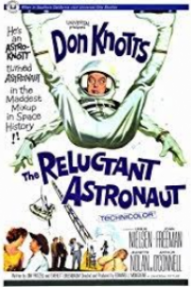
During the 1960's he produced a series of highly successful films starring popular comedian Don Knotts. These included The Reluctant Astronaut, The Shakiest Gun In The West and Nat Hiken's final film The Love God.
In the 1970's Edward worked on some of television's most popular programmes including The Love Boat, The Amazing Spiderman, The Incredible Hulk and Quincy.
Sadly Edward passed away in 2003.
The following interview is the copyright of Edward J Montagne (1997)
Edward recalls The Phil Silvers Pontiac Special:
"It was done on very early tape, in front of an audience. We shot two days, one for the book (script) and one for the musical numbers. I seem to remember that Phil entertained the audience between takes by playing the clarinet. Post-production was tough because tape (on which we were filming) was brand new so there was no electronic editing... we had to cut with scissors. We had to have the show ready the night after we finished shooting. We managed but we were exhausted. The show was made for Phil Silvers' company so the budget was closely watched. I had lunch with Phil and I remember he complained that I had spent too much on the choreographer. I also remember that Phil tried to talk Gene Kelly into doing the part that Sydney Chaplin played."
On the so-called lost Bilko episodes:
There were three episodes that we we never allowed to re-run. The episode with the four Crosby brothers (Bilko & The Crosbys), the episode with Kay Kendall (Sgt.Bilko Presents Kay Kendall) and the Merry Widow episode (Bilko's Merry Widow). It was all to do with residual's and costs. By the fourth season we were being beaten in the ratings by a police show from Universal. So I tried to get guests in with some name power. The Crosbys had never appeared together so I spent $20,000 to get them. That was a lot of money in those days. I forget what we paid Kay Kendall but it was a lot because she was very hot at the time. It worked because in both cases the ratings soared.
On Maurice Gosfield:
I don't think anyone ever hated Maurice Gosfield. He was a slob who enjoyed his brief celebrity more than anyone I ever knew. He considered himself a thespian and loved talking about the theatre and acting. He always felt that Doberman was a character he was playing. The truth is that Doberman and Maurice were the same. No one ever took Maurice seriously. We would bet on how long he would go before blowing a line.
I remember a few years later, when we were doing McHale's Navy, I was having lunch with Tim Conway. Maurice came by the table and when introuduced to Tim said "At one time I was a star like you!". How could you hate anyone like that?
Edward J Montagne
1997
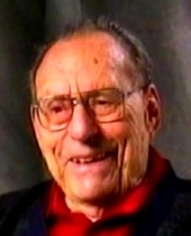
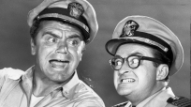
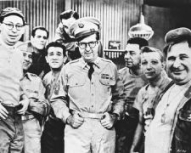
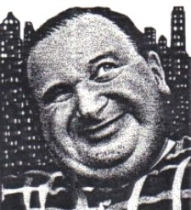
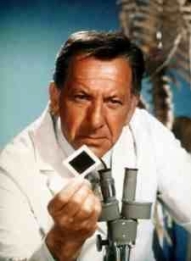
Harvey Lembeck
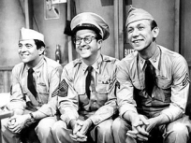
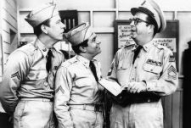
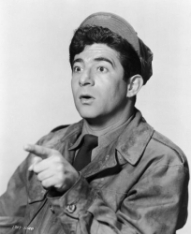
Perhaps one of the best loved and most respected cast members of The Phil Silvers Show was Harvey Lembeck. Harvey played the role of Corporal Rocco Barbella, friend and henchman to Sgt. Ernie Bilko, throughout all four seasons of the show.
It was his partnership with Allan Melvin (Corporal Henshaw) that proved to be a cornerstone in the success of the show. Henshaw and Barbella were almost written (and played) as if they were the embodiment of Bilko's conscience.
Harvey was born in Brooklyn, New York on 15th April, 1923. He began his showbusiness career in the 1930's as one half of a dance act. The act was called The Dancing Carrolls and featured Harvey and Caroline Dubs, whom he would eventually marry. Harvey described the act as "the worst dance act in showbusiness!".
At the end of WWII Harvey decided to pursue his dream of becoming a sports announcer. He attended New York University and in 1947 graduated with a degree in radio arts.
Upon the advice of one of his lecturers, Harvey began to apply for acting auditions. The lecturer in question had been so impressed with Harvey's acting abilities, displayed in college productions, he advised Harvey that acting was where his future lay.
In 1948 Harvey successfully auditioned for the Broadway production of Mr Roberts starring Henry Fonda. It was here that he met future Bilko co-stars Karl Lukas and Tige Andrews. He followed up his success in Mr Roberts with a major supporting role as Harry Shapiro in Stalag 17 and as a bookie in USS Teakettle. He made his film debut in 1951 in You're In The Navy Now and in 1953 he reprised his Broadway role, to great acclaim, in Billy Wilder's film version of Stalag 17.
In 1954 he returned to Broadway with a role in Wedding Breakfast. Nat Hiken had been impressed by Harvey's performance and subsequently asked him to attended a casting call for The Phil Silvers Show. According to Phil's autobiography he eventually landed the part of Cpl. Rocco Barbella following the departure of comedian Buddy Hackett. Buddy had been cast as Barbella but left the production after being offered a large role in a Broadway production of Sidney Kingsley's Lunatics & Lovers.
After the Bilko platoon demobbed in 1959 Harvey returned to working on stage, television and in films. In 1961 he played Jerry Roper in the sitcom The Hathaways, alongside Jack Weston and Peggy Cass. He returned to military duty in 1962 when he co-starred with Dean Jones in Ensign O'Toole.
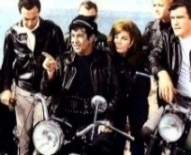
His biggest success of the 1960's came when he signed on to appear in a film called Beach Party in which he played Erich Von Zipper. Zipper was a loveable bad guy, a parody of Johnny Strabler - Marlon Brando's character from The Wild One. Beach Party was a huge hit for AIP and seven films were made in total. Harvey appeared in all but one - Muscle Beach Party.
1964 saw a huge challenge for Harvey when he was asked by Jack Kosslyn of the Mercury Theatre to take over the actors workshop. It was from this that Harvey founded The Harvey Lembeck Comedy Workshop. He developed a system of improvisational comedy workshops which he felt allowed performers to develop their comedic skills. "You can't teach an actor to be funny." he said "If the humour is innately there we will give him the tools and nourish his own abilities to grow."
It proved to be a huge success. The Harvey Lembeck Comedy Workshop still exists today and is run by his children, Michael & Helaine, both of whom continue to teach. It is a testament to Harvey's foresight and talents. Over the years many of todays most successful comedic performers and talents have passed through it's doors - Robin Williams, Penny Marshall, John Ritter, Scott Baio, Cathy Silvers and Kim Cattrall to name but a few.
Harvey also continued to act. He enjoyed great success as Sancho Panza in the Broadway production of Man Of La Mancha. Throughtout the 1960's and 70's he was visible in guest roles in most of the major TV series - The Monkees, Ben Casey, The Man From Uncle, Batman, Night Gallery, It Takes A Thief, Chico & The Man, Vegas, Chips and Mork & Mindy. He also directed touring productions of both Stalag 17 and Mister Roberts.
In 1980 he attended a Bilko reunion of sorts in Las Vegas when he and several of the old gang, including Phil Silvers, Billy Sands and Allan Melvin paid a visit to Herbie Faye in honour of his 80th birthday. Herbie was in poor health but was nontheless overjoyed to see his old friends once again.
Harvey made his final film The Gong Show Movie in 1980. He also continued to work sporadically on television, appearing in The Love Boat, Hart Of The Yard and Mork and Mindy. He continued to teach classes at The Harvey Lembeck Comedy Workshop, passing on his vast experience to a whole new generation of up and coming performers.
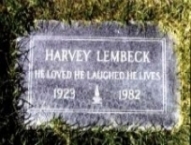
Harvey Lembeck sadly passed away on January 5th, 1982. He was 58 years old. His contribution to the world of entertainment, particularly in the field of comedy continues to this day. He was survived by his wife Carol and his children Michael Lembeck and Helaine Lembeck (Woff).
A Message from Harvey's family.....
How wonderful it is to know that there are so many people who still love and enjoy the show today as in the fifties! Thank you for keeping this fabulous show and it's talented cast alive!
Helaine Lembeck & Family
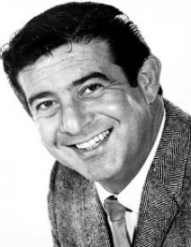
Joe E Ross
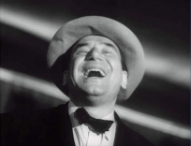
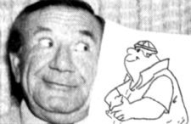
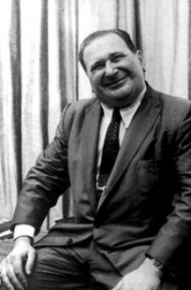
Joe E Ross was born Joseph Roszawikz on March 15, 1914 in Manhattan. He attended Seaward High School and often after school he worked as a boy tenor, earning money by singing in local restaurants and theatres. It was said that his voice was so sweet that he could bring even the most hardened of men to tears. When his voice broke at age 16 he moved into comedy and built up a steady reputation as a comedian and impressionist.
He found employment working as an MC and an announcer at various night clubs and burlesque houses in Chicago. When the opportunity arose he would often appear on the bill as the house comic too.
In 1938 he secured a 16 week contract to appear as the house comic at a nightclub in Jackson Heights, New York. By now he had a reputation as a solid, dependable comic although by this time he had gained notoreity by being somewhat risque compared to most burlesque comics. Joe was a hearty, lusty young man and his comedy style was considered too 'blue' for some of the more respectable burlesque theatres.
It is rumoured that during this time Joe developed his trademark catchphrases - the immortal "Ooh, Ooh!" and "Do You Mind?...DO YOU MIND?". The former developed as a nervous reaction due to Joe's habit of often forgetting where he was in his routine, whilst the latter was often used to deflate the hecklers in the audience.
When World War II broke out Joe enlisted in the Army Air Corps and was posted to Florida. He also spent some time on a posting to England.
After the war Joe returned to the United States and found gainful employment as the announcer, MC and resident comedian at Billy Gray's Band Box in Hollywood. It was a popular haunt of both the Jewish and the gangster fraternity and offered many young, up and coming comics their start in showbusiness.
It was during a hiatus in filming (the first season had just wrapped) that Phil Silvers and Nat Hiken were in Miami. They were touring night-clubs and theatres looking for a comedian or actor to fill a role in the forthcoming second season of The Phil Silvers Show. Sadly Harry Clark, who played Sgt. Stanley Sowici had tragically died following a game of racquetball. Rather than replace him with another actor Nat had decided to write a new character altogether into the show.
Whilst watching Joe's routine at Club Ciro in Miami, Nat decided that Joe would be perfect for the show. Upon his return to New York, Nat Hiken offered Joe a contract and Sgt. Rupert Ritzik was born. Indeed he went on to become an integral part of the show. His partnership with Jimmie Little provided some of the shows great comic moments.
Ritzik was a great foil for Sgt. Bilko and once he was rounded out as a character and paired with Beatrice Pons as his long-suffering wife Emma, Ritzik became one of the shows stand-out characters. Once in a while Phil admitted he would throw Joe a wrong cue just to try and ellicit that wonderful "Ooh, Ooh!".
When the show finished in 1959, Joe E Ross returned to the nightclub circuit. Over the next two years he made scant appearances on television and in films - he had an uncredited role in a film called Tall Story (1960) and appeared in Jerry Lewis' The Bellboy (1960).
His greatest success and the one which brought him true fame was his role as Officer Gunther Toody in Nat Hiken's Car 54, Where Are You?(1962). Nat had enjoyed working with Joe and felt that he would be perfect for the role of Toody alongside Fred Gwynne as Officer Francis Muldoon. Fred had of course also appeared in The Phil Silvers Show (Eating Contest and It's For The Birds).
Nat even brought back Beatrice Pons to play, once again, Joe's wife Lucille. Several of the old Bilko cast and crew were also back on board including, Al Lewis, Charlotte Rae, Jimmie Little, Frederick O'Neal, John Strauss, Al De Caprio and Ray Sandiford.
The show was a huge hit and ran for a total of 60 episodes over two seasons. Once again the quality of Nat Hiken's genius shone through and the show won an Emmy in 1962 for Outstanding Directorial Achievement in Comedy (Nat Hiken).
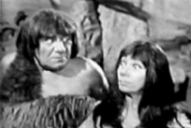
Over the next decade Joe worked steadily in television, films and live appearances. In 1966 Joe returned to television in the short-lived sit-com It's About Time playing a Stone Age cave-man called Gronk. He appeared in the Batman TV series, had a brief cameo in two Disney films The Love Bug (1968) and The Boatniks (1970).
In the 1970's Joe provided the voice-overs for two memorable Hanna-Barbera cartoons - he was the voice of Lionel J Botch in sixteen episodes of Help, It's The Hair Bear Bunch (1971) and Sergeant Flint in Hong Kong Phooey (1974) - again sixteen episodes.
In 1974 he reprised the role of Gunther Toody for 8 animated shorts based on Car 54. The shorts ran with Wait Til Your Father Gets Home - a forerunner of shows like The Simpsons and Family Guy. There were talks of a full animated series of Car 54 shows but the project was shelved.
Sadly Joe never quite reached the heights of his Bilko/Car 54 fame and was reduced to the odd cameo on televsion or film. He made a brief cameo in The Happy Hooker Goes To Washington (1977), appeared in The Love Boat (1978) as Mr Ross. His last credited work was a voice-over for an animated short entitled No Man's Valley (1981).
Joe E Ross passed away whilst performing a show for the residents of the complex where he lived, in California at the age of sixty-eight on August 13, 1982.
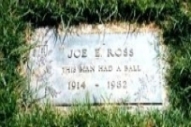
He was buried in Forest Lawn Memorial Park, Hollywood Hills, California.
His headstone reads "This Man Had A Ball!"......
Ooh, Ooh...what an epitaph!
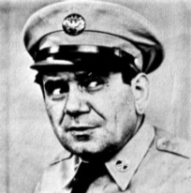
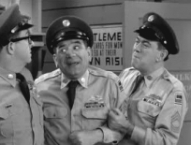
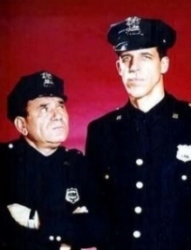
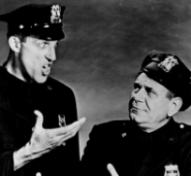
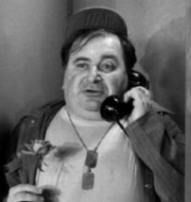
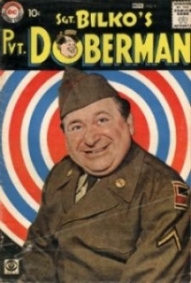
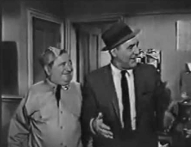
Maurice Gosfield
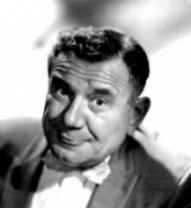
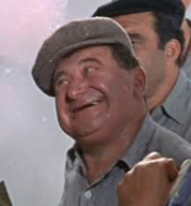
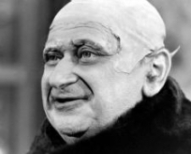
Maurice Gosfield was born on January 28, 1913 in New York City, New York. He showed an early interest in performing and joined a local amateur dramatics group.
He made small in-roads into showbusiness, by appearing in amateur productions. His unique physique and looks made him the obvious choice for character roles. He also began to work on local, small-time radio stations and made an early stage debut in the 1937 Broadway play Siege.
During the Second World War he served the US Army as a TEC4. He was a specialist technician/mechanic who achieved the rank of Sergeant.
After the war he decided to pursue a career as an actor. He appeared in some minor radio dramas, theatre productions and made numerous night-club appearances.
His first television credit was for an appearance in The Clock (1949). The show was a half-hour murder-mystery anthology series which featured rising stars such as George Reeves and Leslie Nielsen. He can also be heard in The Andrew Jenkins Case - Broadway Is My Beat (1949) - a radio crime drama starring Anthony Ross. Interestingly Bern Bennett played an announcer in the show.
In 1951 he played the role of President in the Broadway play Darkness At Noon and followed this in 1952 with a small role as a Turkish gentleman in the Jules Styne/George Abbott stage production of In Any Language.
Maurice attended and open casting call for The Phil Silvers Show in late 1954. He was immediately spotted by Nat Hiken. Nat adored his look and hired him for the show. Initially, Maurice's character was called Mulroney but Nat quickly rewrote the role and Private Duane Doberman was born.
Although he was notorious for forgetting his lines and forever turning up late for rehearsals (Phil once recalled one of Maurice's excuses - "A priest short-hopped me for a cab!") - he quickly became a favourite with the audiences. Whenever Phil was called upon to make a personal appearance he made sure to take "Doberman" with him.
His portrayal of Duane Doberman was so successful that DC even afforded him his own Pvt.Doberman comic, a spin-off from the popular Sgt.Bilko comic.
Allan Melvin once recalled that guest star Kay Kendall went for lunch at Lindy's with the platoon. She apparently looked on in shocked awe as Maurice went to work on a mountainous plate of spaghettti and meatballs. Allan turned to Kay and said "Remember, he's working without a net!".
When the show finished in 1959, Maurice returned to work as a jobbing actor. Unfortunately he found that he was now so identified with the role of Doberman that other roles were hard to come by.
His first major project was Summer In New York (1960) - a TV special written by Nat Hiken and starring Phil Silvers. Maurice appeared in a sketch spoofing the birth of The Phil Silvers Show.
He worked steadily in the early 1960's with appearnces on The Jack Benny Program (1960), The Detectives (1961) and The Jim Backus Show (1961).
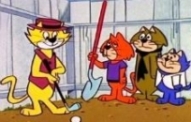
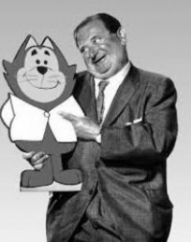
In 1961 he was approached by William Hanna and Joseph Barbera to voice a character in a proposed animated show based on Sgt. Bilko. Arnold Stang recalled that although Maurice was not a great actor he was "...a very sweet man and a great character.!".
Top Cat (aka Boss Cat) was a big success for Hanna/Barbera and remains one of their most popular shows. Ex-Bilko scripter Barry Blitzer was a writer for the show and the Bilko/Phil Silvers connections didn't end there. Arnold Stang and Marvin Kaplan (who voiced Top Cat and Choo-Choo) shared scenes with Phil in It's A Mad, Mad, Mad, Mad World in 1963 and Leo DeLyon (the voice of Brains and Spook) was Phil's pianist and straight-man for many of his live appearances.
Maurice made one final film appearance in the 1963 Doris Day vehicle The Thrill Of It All. Fittingly he shared his scenes with his old Bilko co-star Karl Lukas (Stash Kadowski).
In 1964 Maurice was asked to appear in a pilot for a television show based on Charles Addams' The Addams Family. He was asked to play the role of Uncle Fester. The producers favoured Jackie Coogan but the network executives wanted Maurice for the role. Sadly after make-up tests and some brief shooting Maurice was taken ill.
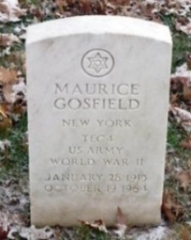
The diabetes that had plagued him for many years took hold. Maurice was transferred to an actors home in Sarnac, New York. Sadly Maurice Gosfield passed away on October 19, 1964 at the age of 51.
The following interview was given by Maurice in 1962.
How does it feel to be working on a show like this?
"The atmosphere surrounding the group at the TOP CAT recording sessions is ideal for a sociable soul like me. It's kind of like the old radio days, from which most us graduated. It's hard work, but it's fun. There's a rare spirit of camaraderie among the group and it reflects in the show."
Which character do you prefer, Doberman or Benny?
"Benny is smarter than Doberman. The most fabulous part about it is the men behind the series. Bill Hanna, Joe Barbera are fantastic men and doing Benny for them is more rewarding than anything I would ever have thought possible. I find that we all mesh as one and that's unusual. Hanna and Barbera's thinking is my thinking so interpreting the loveable character of Benny is no problem!"
How different is it for you, as an actor, working as a voice-over artist?
"The feeling I have about the part is that what you take out of anything, you've got to put back in. I'm positive that Benny is going to do a lot for me, so I intend to put my all into doing Benny!".
So you treat the role of Benny as seriously as some of your other acting roles?
"Oh sure. I've done radio, TV, movies, nightclubs.....even Shakespeare. I have a picture of Benny and where he comes from. That alley just must be in the 40's near the river and from now on, whenever I go to New York I'll expect to see those cats."
You're famed for your distinctive voice and looks....
"It's for sure I'm not the tall, dark, handsome type, but I don't mind....the girls think I'm cute!"
The role of Benny is very close to the Doberman character you played in Sgt.Bilko. Would you say that was true?
"Sure. Benny and Duane are like two peas in a pod. Benny, like Duane, is somewhat of a dolt. But he always manages to be down-to-earth enough to come up with the logical questions. He's the one who has to subdue some of Top Cat's zany schemes by coming up with common sense comments."
Paul Ford
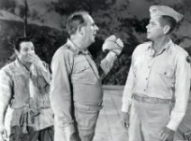
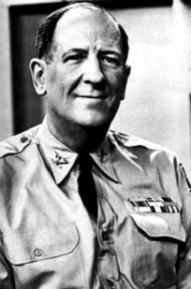
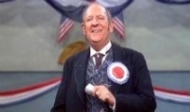
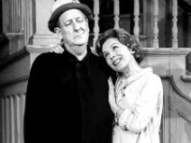
Paul Ford will forever be remembered as the beloved Colonel John T Hall in The Phil Silvers Show. He was so successful in the role it would almost seem that he was born to play the Colonel.
Paul was born Paul Ford Weaver in Baltimore, Maryland on November 2, 1901. From an early age he showed a great love for film and theatre and he loved to perform whenever he could.
His early years with his mother saw him raised in almost abject poverty. Something he never forgot. He once recalled "We had nowhere to sleep but the doorways of the local shops and businesses. It was tough but it taught me the value and importance of money. I swore then, providing for my family came first."
And he was true to his word. Life was tough and as a young man he put his dreams of performing on hold in order to support and raise a wife and family. He worked as a door-to door salesman, a shoe salesman and as bank clerk.
It was whilst working as an insurance salesman in Baltimore that he once again began to harbour dreams of becoming an actor. He joined the local amateur dramatics group and gradually began to develop his stage craft. He also worked for the WPA agency producing and writing puppet shows.
His biggest success came in 1939 when he and his fellow performers staged a puppet production for the New York World's Fair. Gradually he began to find work both on stage and in radio. "My biggest problem was I just never knew where my talent lay." said Paul.
In 1941 and in-between jobs (he was making a living by selling homemade peanut brittle and fudge) Paul made the decision that his future lay as an actor. Paul was offered a job as a superintendent in the building where he, wife Nell and their five children lived. "No super's job for me." said Paul "I'm going to be an actor. I'll be making $100 a week soon!". Nell Ford's response...."You're crazy!".
"I respected my wife's opinions but I didn't let them interfere. I went and got a radio audition under my full name of Paul Ford Weaver!". Sadly he failed the audition. Undaunted by failure he turned up at the studios again just a few days later. This time he registered under the name of Paul Ford and got the job. Within six months his radio work was bringing in $300 a week! He appeared in such shows as Just Plain Bill, The Goldbergs and Ma Perkins.
Paul then decided to take a shot at Broadway. "The fact I had no experience didn't matter." he once recalled. "Producers figured anybody my age must have experience and never questioned me. When I finally got a Broadway part it was for $85 a week. I'll never forget the look on Nell's face when I told her I was dropping big radio money for that!".
He made his professional debut as an actor in 1944 in the Broadway production of a play called Decision. The show was not a huge success but it ran for a respectable four months. It was this that gave Paul the confidence to try to make his living as an actor.
In 1945 he made his film debut with an uncredited role in The House On 92nd Street, directed by Henry Hathaway and featuring Gene Lockhart and Leo G Carroll (The Man From Uncle's Mr Waverley). "It was a small part but I reasoned it was a way into Hollywood. A good way to get my face and name around. " said Paul. He also made his television debut in a production of The Front Page (24 years later he would appear in the stage version).
During the 1940's he worked steadily in many Broadway productions - Flamingo Road (1946), As We Forgive Our Debtors (1947) and Command Decision (1948). He was equally at home in either drama or comedy and was gaining a considerable reputation as a solid, dependable character actor. "It reminded me of the old days - I wasn't quite sure what it was I was good at....I could play drama, I could play comedy....I just didn't know which I was good at!".
In 1953 he took on the role that would propel him into the limelight when he played the role of Colonel Wainwright Purdy III in the Broadway production of The Teahouse Of The August Moon. Wainwright was a blustering, bumbling Colonel who has to deal with the shenanigans of both the Pentagon and a wily local. A delicious blueprint for his later portrayal of Colonel Hall.
Whilst casting for The Phil Silvers Show Nat Hiken had seen Paul's portrayal of Wainwright and thought that with that wonderful hand-dog expression and marvellous delivery he would be the ideal foil for Phil Silvers' character of Sergeant Bilko.
Between 1955 and 1959 TV fans were enthralled by the efforts of the conniving Sgt. Bilko and the long-suffering Col. Hall to outsmart one another. During this period Paul continued to work steadily both in the theatre and on television. During the first season of The Phil Silvers Show he continued to appear as Col. Purdy on stage.
In 1956 he also appeared in the popular film version of The Teahouse Of The August Moon opposite Marlon Brando. His television work inlcuded appearances on Playhouse 90, The DuPont Show Of The Month and The Kaiser Aluminium Hour.
After the cancellation of The Phil Silvers Show Paul continued to work successfully on stage, television and in films. His next stage success came when he was cast in the Broadway production of The Music Man. On television he appeared in Shirley Temple's Storybook (1961), Alfred Hitchcock Presents (1961) and he recreated the role of Col.Purdy for a television presentation of The Teahouse Of The August Moon (1962).
Paul was cast in the stage version of Never Too Late in 1962 and received glowing reviews for his portrayal of Harry Lambert. Harry learns that his fifty-something wife is going to have a baby. The play concerns the ensuing hullabaloo. Maureen O'Sullivan played the part of wife Edith Lambert. The play was so successful that a film version was produced in 1965 with both Paul and Maureen O'Sullivan recreating their stage roles.
In 1963 Paul appeared as Colonel Wilberforce in Stanley Kramer's It's A Mad, Mad, Mad, Mad World. CBS had long been trying to secure his services and had offered him his own show on several occasions. Until now Paul had resisted the temptation. "They all had ideas, nothing more. And I wasn't sure they knew how to handle an idea." he said.
It was Keefe Braselle, a former actor-turned producer (he even appeared in Bilko Vs Covington as Sgt.Covington) who sold Paul on the idea of having his own show. "It was kind of flattering to have them offer me this with a guarantee of 26 weeks work. So I took it!". said Paul.
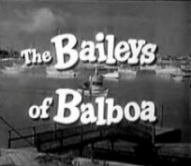
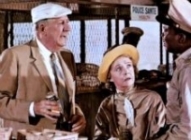
The show was called The Baileys Of Balboa. The plot concerned the Bailey family, who live on a beach-resort. Sam Bailey (Paul Ford) operates a charter boat at the local marina, and is forever coming into conflict with the wealthy inhabitants. Sterling Holloway (the voice of Winnie The Pooh) was cast as Paul's best friend.
It was hoped that the show would become a legitimate rival to Gilligan's Island. Sadly The Baileys Of Balboa went up against Peyton Place in the ratings war and fell casualty to poor ratings. The show lasted for one season, a total of 26 episodes. CBS did not take up the option of a second series.
Even at the age of 65 Paul showed on sign of retiring. "As long as I am fit, well, earning money and enjoying what I'm doing I'll continue in this business!" he once said. In 1966 he gave appeared in three films, giving outstanding performances in each - The Russians Are Coming, The Russians Are Coming, Big Hand For The Little Lady and Spy With The Cold Nose.
He scored yet another great success playing Bascombe Barlow in the Broadway production of What Did We Do Wrong in 1967. This was also the year that he appeared in the controversial film (it dealt with the Papa Doc regime in Haiti) The Comedians alongside Richard Burton and Elizabeth Taylor. There was a happy reunion with his old Bilko co-star Phil Silvers when they appeared together on a programme called That's Life in 1968.
When he turned 70 Paul began to think about his retirement from the business. "By now I'd done pretty much everything I could do as an actor - radio, television, theatre and films. I began to feel that this old dog had had it's day! I'd worked hard to raise my family, earn some money....time to sit back and relax." he once said.
In 1972 Paul made his final television appearance in two episodes of Love American Style, His final stage appearance came in January 1972 with the final performance of Fun City. With that Paul officially retired from showbusiness and settled down to family life at his Long Island home.
Shortly before his death Paul was considering coming out of retirement to film a small role as the Principal of Rydell High School for the film version of the musical Grease. But unfortunately it was not to be.
Sadly Paul Ford passed away at the age of 75, on April 12, 1976.
Tige Andrews
Tige Andrews, popular Company B platoon member Private Gander was born Tiger Androwaous on March 19, 1920, in Brooklyn, the son of Lebanese parents who apparently named him after a strong animal to guarantee him good health!
Tige was once described as a square-jawed, authoritative-looking actor of stage and screen who perfectly fitted the role of a tough police officer, although he apparently never played one until he was cast as Lt. John Russo in The Detectives.
Andrews served in World War II and when he returned home to New York, attended the American Academy of the Dramatic Arts. His resume includes much theatrical work in the late 1940s and early ’50s, followed by a minor career in movies. He was cast as Wiley in both the stage and film versions of Mr. Roberts.
He principally did TV work after the mid 1950s, including the role of Private Gander on The Phil Silvers Show for the entire first season after being spotted by Nat Hiken.
Although Tige was only stationed at Fort Baxter for one season he certainly made an impression with the cast and crew and his rugged good looks along with Walter Cartier (Pvt Dillingham) contrasted nicely with the unique looks of Doberman, Fleischman and Fender!
Andrews most successful role after Bilko was as a main regular on The Mod Squad, playing the part of Captain Adam Greer, the boss of the undercover unit of the L.A. Police Department, and the only other officer who knew of the Mod Squad’s identities. Andrews was reunited with the three members of the undercover unit in a two-hour made-for-TV movie, The Return of the Mod Squad, broadcast on ABC, May 18, 1979.
Andrews' impressive CV also included episodes of CHiPs, Barbary Coast, Star Trek, The F.B.I, Big Valley, Twelve O’Clock High and Gunsmoke. Movies include The Wings of Eagles, Until They Sail, Imitation General, China Doll, Onionhead, A Private Affair, In Enemy Country and The Last Tycoon.
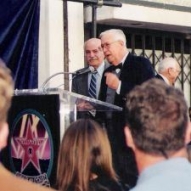
Tige enjoyed a very happy reunion with Allan Melvin and Edward Montagne in 2000 when they joined the Hollywood Walk of Fame celebrations in honour of Phil Silvers. Both Allan and Tige talked with great fondness and admiration for Phil and they peformed a lovely double act ~ the last veterans from that Golden Era of TV, sharing many happy memories of working on the Bilko set.
Tige Andrews passed away peacefully on 27 January 2007 at age 86. We're happy to report Tige's legacy lives on with six lovely children. Three boys and three girls: Barbara, Gina, Julie, John, Steve, Tony, and many grandchildren. Aside from acting, he recorded a single, “Keep America Beautiful” backed with “The Mod Father” in the early ’70s. Tige was also an artist who painted with oils, and wrote a book, Actors as Artists.
During 1987 the Society was lucky enough to share two short transatlantic phone calls with Tige which we have reproduced here. Enjoy!
BPSAS: Hi Tige, this is Steve calling from England.
Tige: Steve at last, been looking forward to speaking with you for some time! Are things going well with the Phil Silvers club?
BPSAS: Very well Tige, We now have over 150 members. But Bilko isn't on the BBC at the moment which is really disappointing. Hopefully it'll be back on in the New Year.
Tige: Oh yeah, I gotcha, right. We have trouble with reruns here in the States.
Gee its really nice of you to call. I was worried when your package didn't get through. You did say you'd send some things but I didn't know if they were bi-annual or quarterly. I'd love to see what you guys are doing!
BPSAS: I'll definitely send you another package and make sure it gets through this time.
Tige: Great look forward to it! And I'll definitely respond!
BPSAS: How's your new show going?
Tige: Well we didn't sell it yet. I'm waiting to hear, kinda hanging in there but I'm up for another project, which means filming in Kenya. I did the pilot ~ its called Operation Watchdog, an anti-terrorist show. I hope it works out, its looking good. So otherwise we're hanging in there, hanging on as it is. Not a lot of big things to do but lots of small jobs....
BPSAS: That's good to know Tige ~ that you're keeping busy. Did you call Allan Melvin?
Tige: Yes we're in touch all the time! I phoned up and his wife answered. A few days later Mick called and we had a lovely chat. Allan is a lovely, dear man! I just saw Phil Silvers on a show last night...
BPSAS: Really? Which one?
Tige: It was the erm, the Uncle Miltie Show. Milton Berle, he was doing a special show with clips from past shows and he shared a ten minute sequence with Silvers...
BPSAS: Was he good?
Tige: Ah terrific. Brilliant! You guys produce a magazine don't ya?
BPSAS: Yes Tige, The Fort Baxter Journal. We've done six so far. And we'd like to do an interview with Pvt Gander for a future edition! Would that be possible?
Tige: Sure! Karl (Lukas) and I did a similar thing for James Dean. There's a guy doing a similiar thing with the James Dean Fan Club you know?
BPSAS: So we got ourselves an interview?
Tige: Sure let's do it!
BSPAS: Brilliant Tige, thanks very much!
Tige: My pleasure. Thanks for phoning and send my regards to your members. Working with Phil was a joy! You keep in touch...
BPSAS: Will do! Will send that package... Bye for now!
Nat Hiken
In one of his final interviews Phil Silvers said "First came the word...!" He was talking about the importance that writer Nat Hiken played in both the creation and development of the characters and the television show that would influence generations of future writers and performers.
Nat Hiken was born in the Lawndale district of Chicago on June 23rd, 1914. When he was six years old his father uprooted the family to Milwaukee. Nat's father Max, was renowned for his sense of humour, a trait that Nat inherited. Often Nat and his father would perform a party piece which involved father and son playing a ventriloquist and his dummy.
As a teenager Nat gained a reputation among his friends as a great storyteller and kibbitzer (a Jewish expression which roughly means unwanted meddler). Nat would always try to find the humour in any situation and he took no prisoners (he would often upset many of his friends with his humour).
However, he excelled at school and in 1932 enrolled at the University of Wisconsin on a journalism course. He joined the staff of the campus newspaper known as The Cardinal. In his senior year he began writing a column called The Gripers Club.
The Gripers Club was a satire of newspaper advice columns where students were invited to write in with their complaints about university life. Many of the letters were written by Nat himself under a number of aliases. Nat later admitted that this helped him develop both his writing style and his ability to create characters. "When I wrote those letters, I became the people writing them, with all their faults and foibles. I found my voice as a writer!"
Nat Hiken graduated in 1936 and headed for Hollywood where he hoped to establish a career as a writer. He landed a job on a morning radio show working with announcer Jack Lescoulie. Recalling his early efforts with The Gripers Club, Nat adapted the idea for radio and the show, which ran from 6am to 8am Monday to Saturday became known as The Grouch Club.
The show quickly became a popular feature. A young actor named Alan Ladd joined the show. Ladd of course eventually went on to become a major Hollywood star. The show became so popular that it attracted the attention of the California Radio System. Nat was none to happy about losing control of the show but he nevertheless appreciated the increase in salary and the lessening of his workload.
The format of the show changed dramatically. The show was lengthened and broadcast once a week on Monday evenings. Nat began to write sketches for the show and he it was here that he finally began to develop his talent for creating and writing character pieces.
In 1939 NBC began broadcasting the show coast to coast. The show soon caught the attention of Fred Allen. Allen was enjoying great success with his own radio show on NBC, The Fred Allen Show.
Nat wrote numerous scripts and gags for The Fred Allen Show between 1942 and 1948. One of his fellow writers was Arnold Auerbach who would eventually work again with him on The Phil Silvers Show. During World War II Nat joined the Winged Victory troupe in the American Air Force.
In 1948 Nat left The Fred Allen Show and went to work as a writer for Milton Berle's Texaco Star Theatre radio programme. In 1950 he wrote The Magnificent Montague for actor Monty Woolley. It was a radio sitcom about a Shakespearean actor working on a radio show.
Television was fast becoming the 'new radio'. Nat was hired as head writer for the NBC variety show Four Star Revue. In 1951 comedienne Martha was hired to star in a revamp of the show, called All Star Revue. Nat saw great potential in Raye and he created a sit-com specifically geared to Raye's character as a man-hungry spinster.
It was the first television programme that Nat Hiken both wrote and directed.
Early in 1954 Nat Hiken was approached by CBS television. They wanted him to create a sit-com for comedian Phil Silvers. Nat was already acquainted with Phil, they often played poker sessions together at the Park Plaza Hotel in New York with Jule Styne and Leonard Stern.
"Phil was a lousy gambler but boy could he talk." commented Nat, "He was quick-witted and very sharp. Often the games would just dissolve into fits of laughter. I just knew that I wanted to work with him."
Phil and Nat spent several months toying with various ideas until they eventually settled on Nat's original idea of Phil playing a fenagling Master Sergeant in the US Army.
The show quickly deposed Milton Berle from his throne as the King Of Television and became a huge hit. After two highly successful seasons Nat was tired of the strain and the punishing pressure and relinquished the reigns of the show, initially to Leonard Stern and then to Billy Friedberg.
After a failed attempt resurrect The Magnicent Montague as a television vehicle (a pilot show and two episodes were filmed with Cedric Hardwicke) Nat went to work on creating four television specials for Phil Silvers (The Ballad Of Louie The Louse, Summer In New York, The Slowest Gun In The West and Just Polly and Me).
In early 1960 Nat began work on an idea for a sit-com based on the day to day lives of a group of police officers. The initial title was The Snow Whites. The project was given the go-ahead and a pilot show featuring Joe E Ross and Fred Gwynne as Officers Toody and Muldoon was shot in January 1961.
NBC were thrilled with the pilot but there was a problem with the show title. Both the Disney company and the producers of the new Three Stooges film (Snow White & The Three Stooges) argued that the current title might adversely affect their films. The show was re-titled Car 54, Where Are You?
Car 54 Where Are You? was a ratings success and ran for two seasons. It was filmed at the Biograph Studios in New York. Nat brought many of his old Bilko cast and crew on board including Al De Caprio, Billy Friedberg, John Strauss, Ray Sandiford, Jimmie Little, Beatrice Pons and Frederick O'Neal.
At the end of the second season NBC decided not to take up an option for a third season. Secretly Nat was relieved. "Nat was under enormous pressure and I think it took it's toll on his health." said Fred Gwynne. "He had to balance all these things...writing, directing and producing. He needed control over everything but it was too much."
With nothing scheduled for the 1963/64 season, Nat tried once more to revive The Magnificent Montague. A new pilot was filmed and Nat took it to Lucille Ball's Desilu Productions, NBC and CBS but none of them decided to take up an option for a series.
He then began developing a show for Al Lewis. Lewis would star as a self-made business tycoon who returns to his working-class neighbourhood. He shot a pilot episode of The Alan King Show but again none of the major networks took up the option of a series.
He returned to television in 1965 when Carol Burnett asked him to write a comedy special for her. Nat came up with Carol + 2 (the other two of the title were Lucille Ball and Zero Mostel). The show was a success and it became clear to Nat that both his future and that of the US television industry lay in California.
However the move to Los Angeles was not the great success that Nat had hope for. There were few offers of work and he spent a great deal of his time socialising and playing golf.
In 1968 his old poker pal Jule Styne approached Nat with the idea turning his old CBS television special The Ballad Of Louie the Louse into a Broadway musical. Nat was interested in the project but before he had a chance to begin working on it he received an interesting offer - the chance to write and direct Don Knotts' latest film The Love God for Universal Pictures.
Knotts' was a popular comedian who had made his name playing Barney Fife onThe Andy Griffiths Show and had already starred in a series of hugely successful films including The Incredible Mr Limpet (1964), The Ghost & Mr Chicken (1966), The Reluctant Astronaut (1967) and The Shakiest Gun In The West (1968).
Nat brought in his old friend Edward Montagne to produce the film and he hoped to rekindle his old partnership with Phil Silvers by writing Phil a part in the movie. Sadly Phil declined the offer, after initially accepting, and against Nat's wishes the role was recast and given to actor Edmond O'Brien.
Sadly Nat Hiken did not live to see the film released. He passed away on December 7, 1968 following a heart attack.
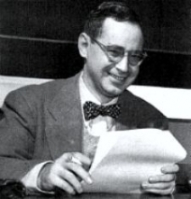
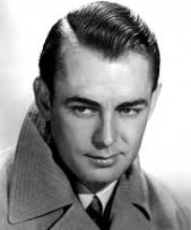
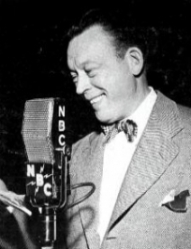
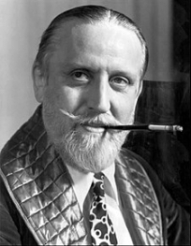
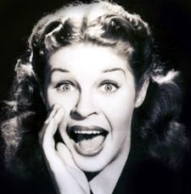
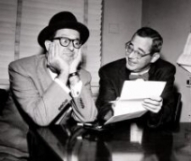
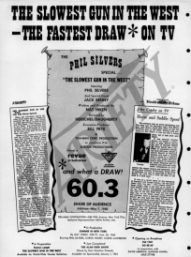
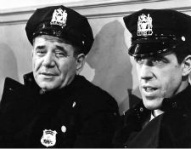
Ned Glass
Sergeant Andrew Pendleton was just one of a number of memorable characters created by seasoned actor and performer Ned Glass. Carving a long and distinguished career he appeared in more than 80 films and over 100 television shows from the late 1940's to the early 1980's. Ned became adept at playing nervous, cowardly or weasely characters but never failed to infuse them with an underlying warmth that enriched each performance. Short and bald, with a slight hunch to his shoulders, he was immediately recognizable by his distinct appearance, his nasal voice and his pronounced New York accent. Attributes that caught the keen eye of Nat Hiken when he was scouting for possible candidates for the first season of a 'new' Army comedy called 'You'll Never Get Rich.'
Ned was born in Poland on 1 April 1906, and shortly after immigrated to the United States with his family, growing up around the hustle and bustle of New York City. Later he enrolled and completed his education at City College. He eventually found himself drifting towards vaudeville and appeared on Broadway in the 1931 Elmer Rice play Counsellor-at-Law. Glass continued to act and direct on Broadway until 1936 when he was officially signed as an MGM contract player. He made his first film appearance in 1937, with an uncredited role in True Confession and his first credited film appearance came in two episodes of the Republic serial Dick Tracy Returns (1938).
From 1937 Ned worked regularly in films, helped along by friends like producer John Houseman and his next door neighbor, Moe Howard of The Three Stooges, who hired him for three small but memorable roles in Nutty But Nice, Three Little Sew and Sew and Hokus Pokus. Ned's filming activities were curtailed between 1942 and 1947, as he had signed up for national service. On completion of his service Ned continued to work steadily building up an impressive portfolio of small but rewarding roles and carving a niche as a much sought after character actor. Ned was also an accomplished and talented carpenter. At the time it was rumoured he was briefly blacklisted, during which he turned his talents to building his own house!
Ned Glass began his foray into television during 1952, when he performed on an episode of The Red Skelton Show. Building on his reputation he was frequently seen in Jackie Gleason's The Honeymooners sketches. From 1955 to 1956, Glass played Sgt. Andrew Pendleton in You'll Never Get Rich, later renamed The Phil Silvers Show, (after - in Phil's own words - 'I believe the children found us... and in American homes they have first refusal on the tuner!'). Ned soon settled into the bosom of Phil and Nat's tight knit family and along with Harry Clark (Sgt Stanley Sowici) and Jimmy Little (Sgt Steve Grover) created such a funsome threesome forever trying (and failing) to outwit Bilko.
Perhaps the tour de force performance of all three players is the sublime first season episode The Empty Store when after being frozen out by the three Sergeant's Bilko resorts to a bout of psychological warfare and rents an 'empty store' in downtown Roseville! Mickey Freeman said that Ned left the show because "He was homesick. he had a beautiful home in California and he just missed it!".
No doubt Ned's stint at Fort Baxter fuelled his subesquent career and he continued to work steadily in film and television. Two highlights from that era ~ Byron Haskin's 1953 production of The War of the Worlds with Gene Barry. Again Ned has a small, uncredited but memorable role as a 'well dressed looter' and I'll never forget him staggering down a deserted street after the martians had destroyed the city. The second memorable performance (although there are many to choose from) and again its a tiny role that Ned fleshes out beyond the basic framework of a background character.
The classic Rod Serling episode of The Twilight Zone, A Passage for Trumpet (20 May, 1960) is a beautifully constructed slice of classic television with a tour de force performance by Jack Klugman who plays drifter Joey Crown, a suicidally despondent trumpet player who finds himself in a bizarre world where he seems to be the only moving being, except for one helpful other musician played by John Anderson. Ned plays the pawnbroker who buys Joey's trumpet and the interaction between these two characters is instrumental to the whole story. It is without doubt one of Rod Serling's best pieces of work in an era when talent was top of the agenda.
He remained in steady demand throughout the 1960's popping up in everything from the The Monkees (as fight promoter Joey Sholto), The Baileys of Balboa, The Dick Van Dyke Show, Boris Karloff's Thriller, The Man from U.N.C.L.E., Adam-12, The Partridge Family, Peter Gunn, Dr Kildare, The Fugitive, Bewitched and back to Rod Serling for an episode of Night Gallery in 1972. His film appearances included: I Love Melvin, Julius Ceasar, Blackbeard's Ghost, A Big Hand for a Little Lady, and into the 1970's with Lady Sings the Blues and Save the Tiger with Jack Lemmon.
Ned was reunited with Phil Silvers on just two ocassions. The first was in 1974 for the Jimmy Sangster penned episode of Kolchak the Night Stalker in which Phil played Harry Starman, a world weary Jew who helps Kolchak (Darren McGavin) investigate a series of deaths that take place in a community populated by the elderly.
The bodies are partially devoured, seemingly by rats, but Kolchak begins to suspect that a more sinister force is at work: a ghastly flesh-eating Hindu demon known as the Rakshasa has set up shop in the area, and it has the ability to take its victims by surprise by appearing to them as the person they trust the most! Ned played Joe, Phil's poker playing buddy and it was heartwarming to see these two veterans sharing scenes together, a wonderful chemistry that rekindled those long gone days working on the Bilko set!
The second teaming came in 1979 for the TV movie Goldie and the Boxer in which Phil and Ned played Wally and Al personal trainers to O J Simpson's boxer Joe Gallagher. The film was successful enough to warrant a sequel Goldie and the Boxer Go to Hollywood but sadly Phil nor Ned were asked to reprise their roles. Phil's role was taken by Jack Gilford.
Ned continued to work in episodic TV. He played "Sol Cooper" on the Diahann Carroll vehicle Julia from 1968 to 1971, and was nominated in 1969 for an Emmy Award for his performance in the "A Little Chicken Soup Never Hurt Anybody" episode. Ned also played "Uncle Moe Plotnick" on the short-lived series Bridget Loves Bernie (1972-73). In 1975 Ned appeared in Rosenthal and Jones for CBS Television.
Highlights of Ned's film career include playing "Doc" in West Side Story (1961), "Popcorn" in Blake Edwards's thriller Experiment in Terror (1962), and bad guy "Leopold W. Gideon" in Stanley Donen's Charade (alongside Bilko alumni George Kennedy) (1963). He was notable in Kid Galahad (1962) with Elvis Presley, Disney's The Love Bug (1968), and Billy Wilder's The Fortune Cookie (1966) His final film appearance was in the low-budget comedy Street Music in 1981, and his final TV appearance was as a pickpocket on Cagney & Lacey in 1982.
Ned was married to Kathryn "Kitty" McHugh, who was brother-in-law to character actor Frank McHugh who appeared in many early Warner Brothers films, and bit player Matt McHugh. Sadly Kitty committed suicide on 3 September 1954, and Glass later married actress Jean Burton.
Ned Glass passed away in Encino Hospital in Encino, California on 15 June 1984 at the age of 78, after a long illness. In a career that spanned over five decades Ned bought joy to the world with a rich and diverse range of characters. Not least Quatermaster Sgt Andrew Pendleton who muttered those immortal words in The Empty Store, 'Give him pleats!'
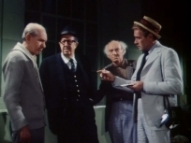
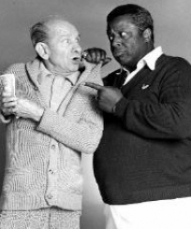
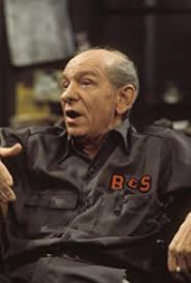
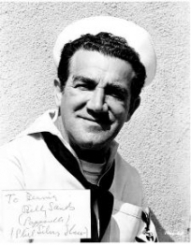
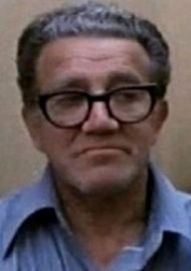
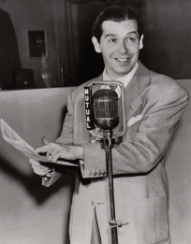
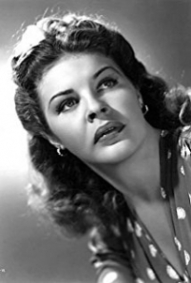
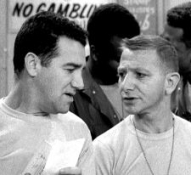
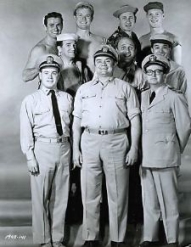
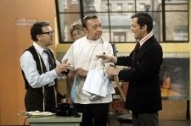
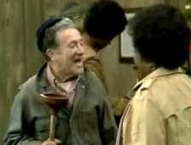
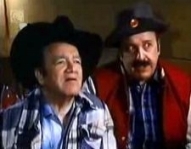
Billy Sands
As Private Dino Paparelli Billy Sands gave us one of the most beloved characters in Sgt. Bilko's Motor Pool platoon. If Bilko gave the platoon brains, energy and drive, then Paparelli undoubtedly gave the platoon it's heart! Loveable and well-meaning, Dino was often called on, sometimes unwittingly, to aid the old Sarge's schemes.
Billy was born William B Sands on 6 January, 1911 in Bergen, New York. At age one his parents moved the family across river to Jersey City in the hope of improving the family's prospects.
He graduated from Dickinson High School and hoped to go to University to study medicine or law. When acting in college productions Billy showed a natural aptitude for performing but he felt that if he was to become a success his future lay elsewhere. Whilst deciding on which direction to take, Billy took a summer job, working for a family friend, at a popular mountain vacation resort in Wilmington, Vermont.
After a spell as a busboy and luggage handler, Billy found his natural exuburance as a performer taking over. One night, after performing in an after-work staff-night sketch, Billy was asked to join the entertainment staff and he soon found himself working on stage as a comedian and entertainer for the hotel guests.
Whilst many of his contemporaries found employment in the popular Catskills region, Billy's route into showbiz was slightly less conventional. "I didn't get there until I'd been in the business for years and I was earning good money!" He stayed in Vermont for six happy seasons. "I learned a lot during those years. First as a performer and later I ended up having to write, produce and direct. It was a great way to learn!"
After a spell at another vacation resort...."I got to work with people like Elia Kazan, John Garfield and later Danny Kaye and Imogene Coca!"...Billy found his fortunes were failing. Times were tough and Billy decided his future in the business lay as a producer and director not as a performer.
It was whilst casting for an upcoming show that Billy ended up at a casting office in New York. "You look like a funny guy." said the agent, "Do you want to work tonight?". Billy took the job and found himself booked as a comedian at a night club in Newark, New Jersey. "I didn't even have an act...but I made one up on the train journey!"
Although the engagement turned out to be a semi-professional/amatuer night Billy was a success. "I was paid $5 but I got something infinitely more important. The orchestra leader, a nice guy named Leo Feinburg, got the word around that 'the kid is funny' and it got to me and it felt good. I suddenly realised that this was the 'end' of the business I wanted to be in, that it didn't matter if I made a few dollars less until I was known."
Gradually he found work in various nightclubs and theatres in and around New York and began to build a reputation as a genuinely likeable comic. He dallied with some straight dramas and plays with little success. "I did try drama early in my career but people kept laughing at me so what could I do?."
In 1941 Billy was called up for service in the Army Signal Corps. He spent two years in the Corps, alongside his future Bilko co-star Maurice Gosfield. They were stationed at Fort Monmouth. Billy worked his way up to the rank of Sergeant! On his discharge in 1943 he returned to his career as an entertainer and was immediately recruited for a USO tour with Moss Hart. Hart, a playwright and director had recently scored a huge hit with The Man Who Came To Dinner. Indeed this was the play in which Billy performed the role of 'Banjo' on the USO tour.
On his return to the US he signed up with an agent. Billy began to work steadily on the radio shows of some of the biggest names in showbiz - Perry Como, Martha Raye and Ray Bolger to name but a few. He made his Broadway debut in a 1943 production of I'll Take The High Road (produced by Milton Berle) and went on to play opposite Spencer Tracy in the 1946 production of The Rugged Path and returned again in 1948 playing opposite Sid Caesar in Make Mine Manhattan.
During this time Billy appeared in a number of theatre productions including a touring production of Golden Boy (in which he played the role originally played by John Garfield) and Heavenly Express in which he played an ageing hobo.
He was offerered a contract to work as MC and resident comic at Grossinger's, part of the Borscht Belt circuit in the Catskills Mountains, a training ground for a host of popular comedians. In the audience one night was a certain Milton Berle. Berle, who had used Billy in I'll Take The High Road and Same Time Next Week, liked what he saw and hired Billy to take over from Arnold Stang on his hugely popular radio programme The Milton Berle Show. He also arranged an audition with a television producer in New York.
The audition proved to be a fortuitous one. "Sitting in the control room when I auditioned was Nat Hiken." said Billy. "He gave me more work than anybody else."
In 1950 Billy landed a job as a comedy announcer with Jack Carson on NBC's 4-Star Revue (later re-named All Star Revue). He later worked with Martha Raye on the popular The Martha Raye Show. The writer and producer of the show was none other than Nat Hiken.
It was 1955 that saw his big television break when Nat Hiken cast him as the loveable Dino Paparelli in The Phil Silvers Show. "I can't ever thank Nat enough for what he did for me. Those crazy days with those fellas and the old Sarge were just a blast. It wasn't like work at all. Just fun, fun, fun."
When The Phil Silvers Show ended its four year run Billy returned to working in nightclubs and theatres in and around New York. He returned to television in 1961, initially in an episode of The Defenders and then old friend Nat Hiken offered him four episodes of his new show Car 54, Where Are You?
In 1962 Billy was hired to play Harrison 'Tinker' Bell in the new ABC series McHale's Navy. "How I got the role was a story in itself." said Billy. The series was produced by Edward J Montagne whom of course knew Billy from their days on The Phil Silvers Show.
He was signing autographs at the ABC studio when "Ed stuck his head out of a studio door and told the kids the autographs were worthless! Then he asked me if I wanted to come to Hollywood. After he told me about the series I knew I was hooked!"
The show was very much in the Bilko vein. The central character of Quinton McHale was played by Oscar winning actor Ernest Borgnine and once again it was a happy time for Billy. "Ernest Borgnine was wonderful to work with. He was a good actor who handled anything, including comedy, well. He was the one who made the whole show tick!" Mickey Freeman, Billy's old friend from the Bilko days even wrote an episode (An Ensign's Best Friend).
Billy appeared in all 138 episodes of the show as well as two films - McHale's Navy (1964) and McHale's Navy Joins The Air Force (1965) - the latter movie was made without Ernest Borgnine's involvement.
Throughout the rest of the 1960's Billy was largely absent from the screen. He worked as an associate producer on two Don Knotts' films, The Reluctant Astronaut (1967) in which he also had an uncredited cameo appearance and The Love God (1969) which once again reunited him with Nat Hiken in what would sadly turn out to be Nat's final project.
The 1970's and early 1980's saw Billy return to acting with a host of appearances on some the most popular television shows of the era including Love American Style (1971), Ellery Queen (1971), All In The Family (1972), Here's Lucy (1974), Happy Days (1974), The Odd Couple (1974) and The Jeffersons (1977 and 1982). He enjoyed great success playing Monte 'Bang Bang' Valentine in ten episodes of Big Eddie, a popular comedy series about an ex-gambler.
His film appearances included Evil Roy Slade (1971), The Harrad Experiment (1973), Rocky (1976), Raid On Entebbe (1976) and Mel Brooks' Hitchcock-inspired spoof High Anxiety (1977).
In 1980 Billy flew to the Las Vegas home of Herbie Faye, along with Phil Silvers and Allan Melvin to celebrate Herbie's 80th Birthday. "Herbie was thrilled to see them all again." said Herbie's wife Mary-Lou. "He was very ill by then but the sparkle in his eyes was still there. He really enjoyed seeing his old friends again."
He was reunited once again with Edward J Montagne for a brief scene in the 1981 film The Munsters' Revenge. His final role came in a 1984 episode of the comedy series Webster.
Billy Sands passed away on August 27, 1984 in Los Angeles, California. He was 73 years old. He left behind a memorable body of work and a legacy of laughter.
He was survived by his wife of 36 years Marsha and their children Gene and Susan.
Aaron Ruben
Aaron Ruben enjoyed a phenomenal career in both radio and television as a writer, producer and a director. He was born on March 1, 1914 in Chicago, Illinois, the son of Polish-Jewish immigrants, and was raised on the West Side of Chicago and attended Chicago's Lewis Institute. After leaving college he began performing and writing for a local theatre group (again in Chicago). In 1941 he was drafted into the Army and was subsequently stationed in California.
After his discharge in 1943, he stayed on in Los Angeles and began writing comedy sketches for Wally Brown, a comedian on Dinah Shore’s Call To Music radio show. His reputation as a solid gag man grew and he soon found himself in New York writing for the likes of Milton Berle, Burns and Allen, Henry Morgan and Fred Allen.
It was whilst working on The Fred Allen Show that he met Nat Hiken. He then went on to co-write The Milton Berle Show (1947-48) with Nat.
Television soon called upon his talents and he found himself writing for The Milton Berle Show (1953) and Caesar's Hour (1954).
When Nat Hiken surrendered the reins of The Phil Silvers Show, he asked Aaron Ruben (along with Billy Friedberg) if he would help guide the show. After agreeing to oversee proceedings, Aaron eventually ended up working as both a writer and director on the show (his directing credits include Bilko's Merry Widow, Bilko In Outer Space and Weekend Colonel).
Following The Phil Silvers Show, having been offered the choice of three pilot shows, Aaron worked as a director, writer and story consultant on the hugely popular The Andy Griffith Show.
Whilst working on the show he was particularly impressed with the talents of Jim Nabors, a comedian hired for a guest spot in an episode called Gomer Pyle USC. Nabors was such a hit that Aaron approached the network with the idea of creating a series featuring Nabors' character.
Gomer Pyle USC the series debuted on the CBS network in September 1964 and ran until May of 1969. It was a ratings winner. CBS saw it as a traditional comedy, promoting decent family values. Sadly the show was cancelled in 1969 when the network deemed that the show had lost it's appeal. It was felt that due to the Vietnam war, Army shows no longer appealed to younger audiences.
In 1969 he teamed up with comedy veteran Carl Reiner to co-write and co-produce The Comic starring Dick Van Dyke. The film's central character of Billy Bright was reported to be loosely based on Stan Laurel whom Van Dyke had befriended in the 1950's.
Writer and producer Norman Lear hired Aaron to produce Sanford & Son in 1972. The show was a US version of the hugely popular UK comedy Steptoe & Son, written by Ray Galton and Alan Simpson. Aaron left the show after three very successful seasons.
In the following years he went on to work as writer and executive producer on a number of shows including CPO Sharkey (1976) a comedy starring Don Rickles, set in the US Navy, Teachers Only (1982) a comedy set in an Los Angeles High School featuring Norman Fell and Too Close For Comfort (1985) a half hour comedy show starring Ted Knight. He also worked solely as a writer on The Stockard Channing Show (1980).
His last writing and production credit was for Piece Of Cake (1990) a comedy set in a family-owned bakery.
In his later years Aaron spent much of his time as a court-appointed special advocate representing abused and abandoned children in Juvenile Court. He'd begun doing charitable work in the early 1970's with wife, actress Maureen Arthur. In 1999, in recognition of his services he was named volunteer of the year by the Los Angeles Child Advocate's Office. In honour of his services they founded The Aaron Ruben Scholarship Fund.
Aaron Ruben passed away on January 30, 2010. He was 95 years old. He is survived by his wife Maureen, two sons, two grandchildren and three great-grandchildren
In 1997 I had the great pleasure of speaking to Aaron Ruben about the time he spent working on The Phil Silvers Show.
The following are excerpts from that interview:
How did your association with The Phil Silvers Show begin?
Well, Nat I knew from the days when we were writing for Milton Berle. Nat was just so driven. He was a hands-on type of guy...had to do it all. He would write, direct, produce and it would make him crazy. He just burned himself out and so he asked me to take over. I think in the end that's what killed him...when he did Car 54....he had to be involved in everything.
By the time you came to the show you'd already worked with some of the biggest names in comedy....Milton Berle, Fred Allen, Sid Caesar. What was your opinion of Phil Silvers?
If you worked in comedy you knew about Phil. He was a talent....a real talent. My first couple of weeks on the show they asked me to direct. I was nervous....I told them I'd never directed before....but they said they needed someone who could also write...who could change something and keep things moving....well that worried me. Nat took me to one side and said "Phil is the best....the best!" That's exactly what he was...the best! Phil would listen, he never once said no to anything I suggested. I've worked with a number of greats....Milton Berle, Fred Allen, Sid Caesar....but Phil was the greatest! I loved working with him....
Allan Melvin once said that Phil was very quite and unassuming off-camera...would you agree with that?
He didn't mix too much with the other guys. He was often busy learning his lines or lining up his next bet. He was an inveterate gambler...something everyone in the business knew. My lasting memory of him is this....on filming days he would come in and just slump in his chair. But as soon as he was needed in front of camera he would come alive. I can still see those eyes and those teeth! He would snap and sparkle.....when he was doing Bilko he lit up like a light-bulb. He was a human dynamo...he talked faster than any comic I ever heard. But as soon as the shot was done that was it.....he'd slump back into the chair!
Did Phil ever have any say or input into the show or his character?
You have to realise that Phil had played this character in one form or another for much of his career. When the cameras rolled he was Bilko....so yeah he knew the character inside out. Phil was also a great improvisationalist so of course once in a while he'd have a great line he'd come up with.
Would you say that The Phil Silvers Show was a great experience for you?
When I went into the show I thought I knew it all....I was wrong....being on that show taught me so much and I was able to take it with me into the other things I've worked on. Over the years I've worked on some big shows and with some of the biggest names in the business but I treasure my time with Phil, Bilko and The Phil Silvers Show!
Aaron Ruben
1997
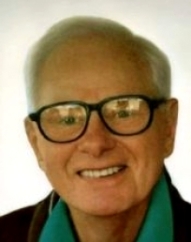
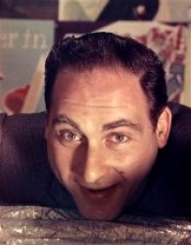
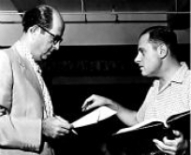
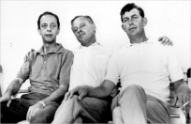
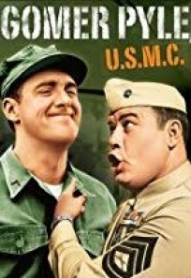
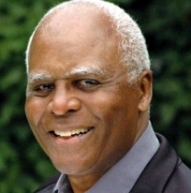
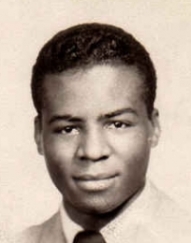
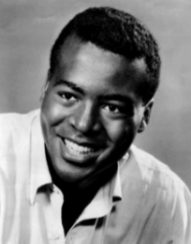
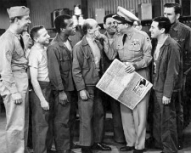
Terry Carter
Terry Carter was born John Everett DeCoste in Brooklyn, New York on December 16th, 1928. Terry’s mother was a native of the Dominican Republic and his father was American -born, of Argentine and African-American descent.
From an early age Terry's parents encouraged him to embrace the ideals of a multi-cultural society and it's inherent diversity.
According to his biography, Terry made his acting debut at the age of 9, when he appeared as the 15th century Portuguese explorer Vasco da Gama in a play at his elementary school in Brooklyn.
Terry graduated from Stuyvesant High School in New York City in 1946 and enlisted in the merchant navy, in order to see the world. Following a six month stint at sea, Terry took a job as a mail clerk at New York’s Museum of Modern Art. It was whilst working at the museum that Terry began to develop a serious interest in film and the arts.
After a year at the museum, Terry enrolled at Northeastern University in Boston to study pre-law. Whilst there, he took a weekend job playing piano with a jazz combo. They played at night clubs, weddings and bar mitzvahs.
It was during the 1950s, whilst studying law at St. John’s University Law School in New York, that he met actors Howard Da Silva and Morris Carnovsky who convinced him to consider the pursuit of a career as an actor.
Realizing that drama training might be of help to him in the courtroom, he studied law by day and acting by night. He was soon offered a scholarship at the Actors Mobile Theatre. Terry took classes in Method Acting and it wasn’t long before he lost interest in the prospects of a law career and acting became his first love.
He dropped the DeCoste surname and took on the more English-sounding name of Carter.
His first leading role came in a production of Edward Chodorov’s Decision, at the Greenwich Mews Theatre in Greenwich Village. He became a member of the theatre group and the following year, in Les Pine’s play, Monday’s Heroes, he played the part of a teenager in a Jewish family, with no special makeup. It was an early experiment in non-traditional casting.
Terry studied with Herbert Berghof, Uta Hagen and Stella Adler. He landed his first Broadway role in 1954, as the lead opposite Eartha Kitt, in the play Mrs. Patterson. The company toured major cities before opening on Broadway at the National Theater, for a run of several months. In 1955 he played the part of Howard in the revival of Finian’s Rainbow at the City Center Theater.
In 1956, Terry was cast as Private Sugie Sugarman in The Phil Silvers Show. "In 1956, strolling on Sixth Avenue in Manhattan, I ran into a friend, fellow actor Ned Glass, who was a regular cast member of the hit comedy TV series You'll Never Get Rich (later known as The Phil Silvers Show or Sgt. Bilko)." said Terry.
"Ned told me that they were casting for the new season and that I should make sure to call for a casting appointment. I did just that, and landed a role that lasted me three great years."
With its multi-cultural cast, something that series head Nat Hiken was insistent upon despite opposition from the studio executives, the show paved the way for the introduction of one of the first black actors with a regular on a TV sitcom series.
In the years following The Phil Silvers Show, Terry went on to appear in numerous television shows including Playhouse 90 (1960), Naked City (1961), Dr Kildare (1964) and Julia (1968) and The Six Million Dollar Man (1973).
In 1965 Terry became world’s first black TV anchor newscaster, for WBZ-TV Eyewitness News in Boston. At the end of his three-year contract he decided to resume his acting career.
He worked steadily throughout the 1960's and 70's. His major breakthrough came with his role as Sgt. Joe Broadhurst Glen Larson's hugely successful detective series McCloud opposite Dennis Weaver, a role he played for 7 years.
In 1978 he appeared as Colonel Tigh in Larson's production of Battlestar Galactica. He later reprised the role as President Tigh in Richard Hatchs’ trailer Battlestar Galactica: The Second Coming, an attempt to revive the original series. In 1980, Terry was elected to the Board of Governors of the Academy of Television Arts & Sciences, where he served two terms.
In 1985, Terry received a Los Angeles Emmy Award for K*I*D*S, a TV miniseries he created, produced and directed. It was a 5-part mini-series about a multi-racial group of teenagers and the conflicts they faced. In 1987-88, he produced and directed JazzMasters, a study of twelve great jazz artists for TV2 Denmark. The series featured interviews and performances of the likes of Chet Baker, Kenny Drew, Dexter Gordon and Herbie Hancock.
In 1988, Terry produced and directed the award-winning, Emmy-nominated TV musical documentary A Duke Named Ellington. Making this documentary required Terry to spend a lot of time in Copenhagen, Denmark, where Duke’s son Mercer lived.
Terry played the role of Texas Slim, head of the CIA, in the Swedish international thriller movie Hamilton (1998) and returned to the role in the subsequent mini-series in 2001. Also in 2001, Terry was commissioned by the Library of Congress to create the Katherine Dunham Technique, a study and guide video for teachers and students of dance.
In 2007, he appeared in 18 episodes of the Norwegian daily dramatic series Hotel Caesar as Solomon Tefari.
Terry is currently residing in Scandinavia whilst maintaining a base in New York. He continues to pursue his producing and acting career.
Maurice Gosfield Interview
Following the success of his role as Benny The Ball in Top Cat, Maurice Gosfield, formerly Sgt. Bilko's side-kick Private Duane Doberman, appeared in the 1963 Doris Day-James Garner romantic comedy The Thrill Of It All.
Although Maurice often claimed this was his first film, he had previously appeared in Ma & Pa Kettle Go To Town (1950) and Teenage Millionaire (1961).
Whilst filming his role in The Thrill Of It All, Maurice gave several interviews, excerpts from which are reproduced here......
"Movies are a very funny business. They sez to me 'Howd'ya like to do a nice little role in The Thrill Of It All? I sez back to my agent 'fine - it's about time I got me a real part in a picture.
When he tells me the money and when I hears it, naturally I agree. Then he sends the script. I read it. I'm the second driver of a dump truck! They've got Robert Strauss (who appeared alongside Maurice in Bilko Goes To College) playing the first driver because between us, he's much safer behind the wheel.
I calls up my agent and says 'I'm not a star and I know it. But what's dis? You mean they'll pay me all that moolah for me to do a bit part?'. My agent says back 'Maury, that's no bit part, that's a cameo!' So I sez 'cameo, smameo, money is money and here I am!'."
Maurice was also re-united with his former Bilko cast mate, Karl Lukas, who had played Kadowski. In between takes, Maurice, Karl and Robert Strauss enjoyed a few hands of poker and blackjack.
"This is my first movie and in the bit, oh excuse me, cameo, me and the other guys have to shovel gigantic soap bubbles from the Doris Day-Jim Garner swimming pool. Lucky ting I ain't allergic to the stuff cause I'd hate to get detergent hands! Got to keep myself in top shape just in case Cary Grant should suddenly get sick!
Ya goes where the work is. Besides, to tell ya the truth I'm not what you'd call a good New Yorker. In all the years I lived there I only went to Brooklyn five times - and then only to go out to Nathan's, that famous hot dog place at Coney Island. I likes dis fresh air out here. Smells just like the aroma of my my cigar!"
Maurice Gosfield undoubtedly scored his biggest hit with his role as Pvt. Duane Doberman in The Phil Silvers Show. Maurice also revealed he had crossed paths with Phil before the Bilko show.
"I worked once before with Phil on a radio show. It bombed. When I auditioned for Bilko he said 'No, no, not you - what are you trying to do - ruin me? You want this show to be cancelled too?' Now I want to make a little of the loot myself. I've got a writer shaping up a TV series for me. Everybody else is doing it. Why not me?"
Maurice Gosfield and Karl Lukas were reunited in The Thrill Of It All (1963) but there were more Bilko connections too - Robert Strauss (who plays the foreman) appeared in Bilko Goes To College. Other Bilko performers in the film include Herbie Faye (Pvt. Fender), Edward Andrews (Major Lukens - Bilko & The Flying Saucers/Pvt De Witt - Bilko Buys A Club) and Lucy Landau (Lady Roxborough - Doberman, Missing Heir). To further the Bilko connection Doris Day of course appeared with Phil in Lucky Me (1954), and writer Larry Gelbart worked with Phil on both A Funny Thing Happened On The Way To The Forum and Bel Air Patrol (aka Eddie Skinner).
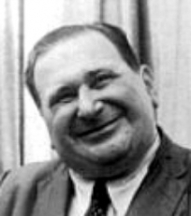
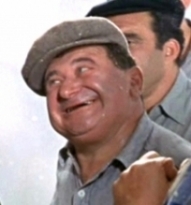
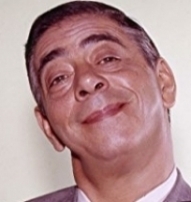
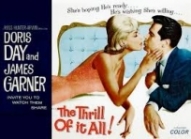
John Gibson
John Gibson is best known to fans of Sgt. Bilko for his portrayal of the Chaplain during the four season run of The Phil Silvers Show. He was born in Oakland, California on June 29, 1905. He attended the University High School in Oakland and during his time there he was elected president of the student body.
He made his theatrical debut at the age of 15 in a production of Pietro with the Fulton Theatre Stock Company, in his hometown of Oakland. Apparently a dog was needed for the production and as John had a dog he was offered a role in the show. John, along with his pet dog Paul, were called upon again for a production of The Little Shepherd Of Kingdom Come.
It was these early stage appearances that convinced John that his future lay in acting. Instead of going to college, he set off to seek fame and fortune in Hollywood.
He spent a year working on dozens of silent B movie productions for small film companies, appearing in comedies, dramas and adventure movies. They were small, often uncredited parts but they helped give him acting experience.
Having left Hollywood he briefly joined the San Francisco Players Guild performing in several minor stage productions. He returned to Hollywood and joined a small stock theatre group. They toured California, putting on a different play each week, with John as the leading man.
He began his radio career in 1932 with a show called Globe Headlines. For the next seven years John played the part of Sleepy Dolan.
In 1937 he lent his vocal talents to the Disney Studios. Walt Disney was a fan of Gibson's character of Sleepy Dolan and was said to have based the animated Sleepy, one of the dwarves in the original Snow White animated feature, on Gibson's character. Indeed, he not only voiced the animated character, he acted it. His facial features were actually filmed and replayed by the animators as they animated the character.
John enjoyed a hugely successful radio career appearing in such shows as Lux Radio Theatre, Nick Carter Master Detective, The Adventures Of The Falcon, Dick Tracy and The Morey Amsterdam Show, and working alongside some of radio's biggest names, including Jack Benny, Milton Berle and the Marx Borthers. He also enjoyed long running roles on Wendy Warren and the News, which he worked on for four years and Don Winslow of the Navy on which he spent three years playing Red Pennington.
In 1950 he worked with Nat Hiken again (he'd previously worked for him on The Milton Berle Radio Program in 1947) when he was hired to play Zinzer in The Magnificent Montague, Nat's comedy show about a failed Shakespearean actor.
John made his television debut in 1951 in the television version of Crime Photographer, playing Ethelbert - a character he'd previously played in the 1946 radio version, directed by none other than Sidney Lumet.
His reputation as a solid, dependable actor saw him working on some of the 1950's most popular television shows including Hallmark Of Fame, United States Steel Hour and Kraft Television Theatre.
In 1955 he appeared alongside Jackie Gleason in several episodes of the hugely popular comedy show The Honeymooners. It was also at this time that Nat Hiken, having recalled John's previous work for him, asked him to audition for The Phil Silvers Show. Having auditioned for several roles, Nat felt that John was perfect for the role of the camp Chaplain.
Whilst appearing on The Phil Silvers Show, he continued to work both on television in such productions as Studio One, True Story and Naked City, and in radio on shows such as CBS Radio Workshop, Suspense and The Couple Next Door. In 1958 he also appeared on the big screen alongside Clark Gable in Run Silent, Run Deep.
Following the cancellation of The Phil Silvers Show John continued to work steadily as a television actor. Roles followed in Way Out (1961), The Defenders (1962) and Armstrong Circle Theatre (1962).
He worked once more for Nat Hiken when he made two appearances in Nat's newest TV hit, Car 54, Where Are You?. John appeared in Catch Me On The Paar Show in 1961 and A Star Is Born In The Bronx.
John made one final television appearance in Gomer Pyle USC in 1967 and whilst he continued to work in commercials and advertising, he retired from acting. John Gibson passed away in 1971 at the age of 65. He was survived by his wife Alice and son John Gibson Jnr.
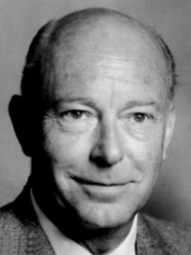
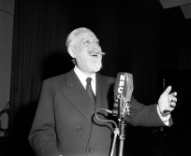
Jimmy Little
Jimmy Little is best remembered by fans of The Phil Silvers Show for his portrayal of Sgt. Francis Grover. Through four seasons he created one of the shows most memorable characters. Jimmy had attended an open casting call in 1954 and Nat Hiken offered him the role of the Chaplain in the pilot episode which had been ordered by CBS.
Sadly, little is known of Jimmy's early life save for the date and year of his birth. He was born in New York on July 3, 1907. After graduating from New York's St. John's University, Jimmy indulged his passion for swimming by becoming a lifeguard. A keen singer, he also began securing engagements at local theatres and nightclubs.
Having spent several years playing minor roles on radio and in theatre, Jimmy was eventually hired in the late 1930's as a contract player at Columbia Pictures. It was during his time at the studio that he was hired to play the straight man to a rising comedy star named Joe Besser.
Besser, a popular vaudeville comedian at the time, later achieved perhaps his greatest fame when he became one-third of The Three Stooges following the death of Shemp Howard. Besser, along with Jimmy, went on the road with an act billed as 'Joe Besser with An Added Attraction'. Eventually they became part of Olsen and Johnson's popular revue Helzapoppin.
The act proved so successful that Besser was hired to make several short comedies for Columbia Pictures, in which Jimmy also appeared. They recreated some of their routines in Hey Rookie (1944), Eadie Was A Lady (1945) and Talk About A Lady (1946).
One of their most popular routines was 'Army Drill', featuring Jimmy as a tough, no-nonesense drill Sergeant and Besser as a bumbling Private. The sketch was used for their appearances on television's Hour Glass (1946) and The Ken Murray Show (1950).
Jimmy was subsequently released by Columbia Pictures and, following an uncredited appearance in the 20th Century Fox film House Of Strangers (1949) returned to working in television and theatre. His first credited TV appearance was a 1949 episode of Martin Kane, Private Eye which also featured his future Bilko co-star, Nicholas Saunders.
During the next few years he worked steadily and appeared in such popular programmes as Decoy (1950), Lux Video Theatre (1950), Starlight Theatre (1950), The Billy Rose Show (1951) and Inner Sanctum (1954).
After a successful viewing of the pilot show, CBS ordered a full season of the tentatively titled You'll Never Get Rich. Jimmy was cast as Sgt. Francis Grover, initially a nemesis of Bilko alongside Sgt.'s Sowici and Pendleton.
Following the departure of actors Harry Clark (who sadly passed away at the end of the first season) as Sgt. Sowici and Ned Glass (who left for personal reasons) as Sgt. Pendleton, Jimmy's role in the show became much more prominent and he went on to form a wonderful partnership with Joe E Ross (drafted in as Sgt. Ritzik to fill the void left following the sad loss of Harry Clark).
In 1958, whilst appearing on The Phil Silvers Show, Jimmy was hired by rival network ABC to appear in the recurring role of the desk sergeant in Stirling Silliphant's police drama show Naked City (1958 -1963).
Interestingly, throughout his career Jimmy was often called upon to play roles of authority - i.e soldiers, policemen etc and he was often billed under different variations of his name. These variations included James Little, James F Little, Jimmie Little and of course Jimmy Little.
In a 1956 newspaper article Jimmy spoke of his role on The Phil Silvers Show. "Nat put me in the pilot show and when the series sold he offered me a regular role as one of the Sergeants opposite Bilko. It's a dream job....we work hard but we also have a lot of fun. It really is a big, happy family of actors and crew. Those poker games you see on screen, we also play off-set.....but only for nickles and dimes!".
Jimmy was just one of several ex-Bilko personnel that Nat Hiken hired to work on his new television comedy series, the Car 54, Where Are You?. He was cast as Sgt. Jim McBride. Rumour has it that it's Jimmy's irish tenor voice that can be heard uttering the 'Car 54, Where Are You?' line of the theme tune!
Jimmy's final credited appearance was on the 1964 TV show Mr. Broadway, a drama series created by Garson Kanin and starring Craig Stevens (of Peter Gunn fame). Sadly, Jimmy passed away in Miami, Florida at the age of 62 on October 12, 1969.
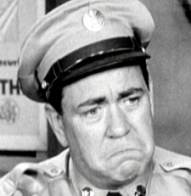
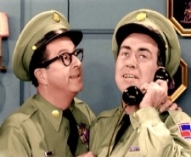
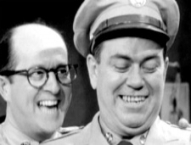
Fred Gwynne
Fred Gwynne is best remembered for his roles in two of the1960s most popular television sitcoms: Car 54, Where Are You? and The Munsters. He's most fondly remembered by fans of The Phil Silvers Show for his appearances in two of the shows most popular episodes: Eating Contest and It's For The Birds.
He was born Frederick Hubbard Gwynne on July 10, 1926 in New York City. His father was a successful stockbroker and his mother was a former cartoonist. Upon leaving High School, Fred enlisted in the US Navy and served as a radio operator on a submarine chaser during World War 2.
After the war Fred secured a place at the New York Phoenix School of Design. He then went on to attend Harvard University where he became president of The Harvard Lampoon, the campus newspaper and using his talent for art he began illustrating cartoons for the publication. He also enrolled in the University's theatrical group, The Hasty Pudding Club.
It was whilst performing in various University productions that he developed a love for performing and decided that his future lay as an actor. Eager to learn his craft, the Harvard graduate joined the Brattle Theater Repertory Company in Cambridge, Massachusetts, where he played a variety of characters in numerous plays.
In 1952 he landed one of his first professional acting jobs when he succesfully auditioned for the role of Stinker in the Broadway production of Mrs McThing, playing opposite Helen Hayes and Ernest Borgnine. More stage work followed and in 1953 he went on to appear in Love's Labour's Lost and The Frogs Of Spring. Uncertain of his future as an actor he continued to work as a copywriter for the J. Walter Thompson Advertising agency in order to make ends meet between acting assignments.
In his first TV appearance Fred played Davy Crockett in an episode of You Are There, a popular documentary re-enactment programme. He made his first film appearance with a small uncredited role in 1954 in On The Waterfront, directed by Elia Kazan and starring Marlon Brando.
In 1954 Fred attended an open casting call for Nat Hiken's forthcoming comedy series You'll Never Get Rich. He auditioned for the role of Corporal Steve Henshaw along with Allan Melvin. The role eventually went to Allan, however Nat with his keen sense of the absurd, and always willing to cast against type thought that Fred, with his gangly six-foot-six skinny build would be the ideal choice to play the part of Private Honnergan, a US Army Champion Eater in a forthcoming episode of the show.
Fred's appearance was so succesful that he was invited back to appear in a second season episode called It's For The Birds. He continued to work steadily on television, making appearances in Studio One (1956), The Kaiser Aluminium Hour (1957), The Steve Allen Show (1958) and The DuPont Show Of The Month (1959).
In 1960 Fred was cast as the pimp Polyte-Le-Mou in the Broadway production of Irma La Douce. Starring Keith Michell and Elizabeth Seal, it was a musical comedy about the expolits of a French prostitute.
Fred resumed his acquaintance with Nat Hiken when he approached him with an idea for a television show he had written. They met at New York's famous Lindy's Delicatessen to discuss Fred's idea. Nat told him that although not a great idea for a TV show it had promise as a possible sketch for Sid Caesar. Nat also mentioned that he too was currently working on an idea for a new sitcom.
Also in the cast were Stuart Damon, who went on to achieve fame as Craig Stirling in The Champions and Dr Quartermaine in General Hospital and Elliott Gould. Gould achieved fame with his appearances in films such as Bob & Carol & Ted & Alice and M*A*S*H.
A few short weeks after their meeting Nat called Fred and asked him to audition for the role of Officer Francis Muldoon and in January 1961 Fred, along with his soon-to-be co-star Joe E Ross were announced as the stars of Nat Hiken's Car 54, Where Are You?. The show debuted on the NBC Network at 8.30pm on September 17, 1961 and quickly became a ratings hit. The show ran for two seasons until it's cancellation in 1963.
Following the demise of Car 54, Where Are You? Fred returned to the stage in Here's Love, a musical comedy based on the 1947 film Miracle On 34th Street. The production also featured his Car 54 co-star Paul Reed and ran for a respectable 334 performances.
In 1964 Fred was cast in CBS Television's new sitcom The Munsters as Herman Munster. At six foot five inches, the already towering actor had to wear five-inch platform boots, a huge prosthetic headpiece and a heavily padded costume, all of which helped transform him into the Frankenstein-like monster that became such a huge hit with both children and adults alike.
The Munsters saw Fred re-united with his friend and Car 54 co-star Al Lewis. During filming both Fred and Al, through their shared love of smoking and hatred of the make-up process, cemented their friendship and became lifelong friends. "I loved working with Fred." said Al. "He was an odd bird....loved the work but hated the fame. Those four years I spent working with him were some of the happiest times of my life!"
The Munsters was cancelled in 1966 and, following the release of the theatrical movie Munster Go Home (1966) Fred looked to re-establish himself as a jobbing actor. However, he fell victim to the curse of typecasting when he found that TV and film producers were unwilling to hire him, feeling that audiences would forever see him as the lumbering but loveable Herman Munster.
Throughout the rest of the 1960's, whilst indulging his passions for writing and painting Fred worked sporadically on television. His appearances included New York Television Theatre (1966), NET Playhouse (1967), Guess What I Did Today? (1968) and Mad Mad Scientist (1968).
In 1969 he played the role of Jonathan Brewster (a role originated on the Broadway stage by Boris Karloff) in a TV movie version of Arsenic And Old Lace. He had high hopes for Anderson & Company, a light-hearted comedy set at the turn of the century, following the exploits of a department store manager and his family. Sadly the studios declined the option to make a weekly series.
Herman Munster was now a dim and distant memory and, unwilling at this point to embrace his creation and fame, Fred returned to the stage in the short-lived 1972 production The Lincoln Mask. He appeared in a television production of Harvey, starring James Stewart, which re-united him with Mrs McThing co-star Helen Hayes.
He received rave reviews for his performance as Big Daddy in the 1974 Broadway revival of Tennessee William's Cat On A Hot Tin Roof. He spent the next few years enjoying acclaim for his stage performances in Our Town (1975) and Texas Trilogy (1976). In 1979 he won an Obie (an Off-Broadway Theatre Award) for his performance in Grand Magic.
By 1981 it seemed that Fred was finally willing to embrace the character of Herman Munster when he agreed to recreate the role for a full-length television film The Munsters' Revenge, along with Al Lewis as Grampa and Yvonne DeCarlo as Lily. It was hoped that a series might be commissioned on the strength of the film however, much to Fred's relief, the film was not as well received as the studio heads hoped.
The 1980's saw Fred's emergence as a skilful character actor. It seemed that the days of being typecast as Herman Munster were over and Fred gave some of the most delightful and memorable performances of his cinematic career in such films as The Cotton Club (1984), The Boy Who Could Fly (1986), The Secret Of My Success (1987) and Disorganised Crime (1989).
He entered the decade of the 1990's with renewed hope along with the promise of a burgeoning career as a fine, accomplished character actor. His finest cinematic role came in the 1992 comedy My Cousin Vinny, directed by the British writer and director Jonathan Lynn and starring Joe Pesci and Marisa Tomei.
Sadly the film proved to be his final cinematic on-screen appearance. During filming he began to feel unwell. Sadly, Fred was diagnosed with pancreatic cancer. He made the decision to retreat from public life, choosing to live out his remaining days surrounded by his family and friends.
Fred Gwynne passed away on July 2, 1993 at the age of 66.
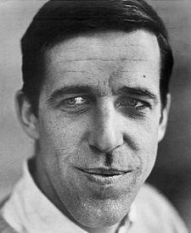
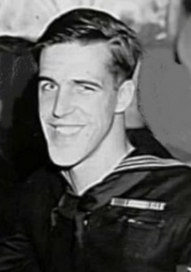
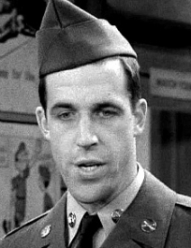
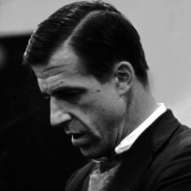
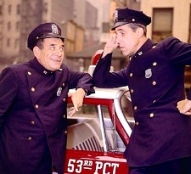
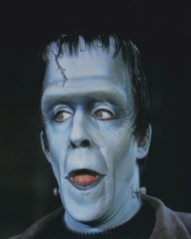
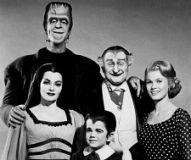
Harry Clark
As Sgt. Stanley Sowici in The Phil Silvers Show Harry Clark (with a more than helping hand from Nat Hiken) undoubtedly helped create one of the first in a long line of television's curmudgeonly characters: The eternal opinionated pessimist - evident in subsequent modern TV sitcoms such as Cheers, Taxi, Seinfeld, Frasier, Everybody Loves Raymond and a whole host of like-minded sitcoms.
Harry was born in New York in 1910. From an early age he showed a keen interest in sports. He studied dramatics at New York University's Health Education School. Following his success as a champion hammer thrower for the University he went on to coach Sports and Physical Education on the campus.
He continued to develop his love for the performing arts during his University days and appeared in many student productions. After graduation Harry spent several years coaching sports whilst continuing to perform in numerous summer stock productions which toured the East Coast of America.
Harry quickly gained a reputation as a versatile character actor, and his body of work on stage coupled with his various radio appearances soon brought him to the attention of Hollywood. He made his cinematic debut with an uncredited appearance in the 1934 Ben Hecht film Crime Without Passion.
In 1941 he appeared once again on the big screen in the film Ice-Capades alongside his future Bilko co-star Phil Silvers.
In 1942 he appeared in the Broadway production of The Skin Of Our Teeth. Directed by Elia Kazan and starring Hollywood legends Tallulah Bankhead and Frederic March, Harry found himself billed above rising star Montgomery Clift.
His next Broadway production saw him playing the role of the prophetically named Stanley in One Touch Of Venus. Starring the great Mary Martin and written by Kurt Weill, with staging by Elia Kazan, it was a musical production based upon the Pygmalion myth. Harry left the production to serve time in the US Army during World War II.
Harry returned to Broadway in the 1946 comedy musical revue Call Me Mister. Harry played a total of ten characters in the show. The comedy sketches were written by none other than Arnold Auerbach who went on to write scripts for the first two seasons of The Phil Silvers Show. The show ran for almost two years and a total of 734 performances.
In 1948 Harry auditioned for and won a role in Kiss Me Kate, a musical comedy adaptation of William Shakespeare's The Taming Of The Shrew. The production was directed by Pembroke Davenport, with words and music by the legendary Cole Porter.
The show debuted on December 30th, 1948 at New York's New Century Theatre. It transferred to the Shubert Theatre in July of 1950 where it ran until July of the following year. The production closed having run for a total of 1077 performances.
Following the closure of the show Harry continued to work steadily on television and radio with appearances in Crime Photographer (1951), Anything Can Happen (1952) and Taxi (1953).
He returned to Broadway in 1952 in yet another musical comedy Wish You Were Here, written by Arthur Kober and Joshua Logan. Logan also served as director of the show and had already enjoyed huge success on Broadway as the director of Annie Get Your Gun, Mister Roberts and South Pacific. He also continued to work steadily on television in popular programmes such as Toast Of The Town (1953), Danger (1954), Justice (1954) and The Philco Playhouse (1955).
As a member of the Broadway Touring Company Harry went on a US tour in the 1953 production of Pal Joey, taking in such places as Cincinatti and Pittsburgh. He played the role of crooked agent Ludlow Lowell.
One of Harry's most notable television appearances came in 1955 in The United States Steel Hour production of No Time For Sergeants based on the novel of the same name written by Mac Hyman.
Starring Andy Griffiths, it followed the adventures of country yokel Will Stockdale who is drafted into the US Army during WWII and assigned to the US Air Force. Harry played the part of Sgt. Orville King, nemesis of Griffiths' Will Stockdale. The show also featured future Bilko personnel Arthur Storch and Bob Hastings.
A Broadway production of No Time For Sergeants debuted at New York's Alvin Theatre on October 20th, 1955. Griffith once again played Will Stockdale, but Harry was already committed to The Phil Silvers Show and the Broadway production of Will Success Spoil Rock Hunter? and was unavailable for the role of Sgt. King.
Nat Hiken had seen Harry in No Time For Sergeants and created the role of the gruff Sgt. Stanley Sowici, one of Bilko's chief nemeses at Fort Baxter for him. He loved Harry's look and the sardonic way in which he could deliver his lines.
Without doubt Harry appeared in some of the finest episodes of The Phil Silvers Show, including The Empty Store, Dinner At Sowici's and The Court-Martial. Often his character held the upper-hand over Bilko and his larcenous schemes, and his ongoing battles with Sgt. Bilko helped contribute to the success of the show itself.
Stanley Sowici was a cultured slob, a curmudgeon, a pessimist and a braggard. In the hands of a lesser performer the character might have proved wholly unlikeable, but Harry's performance gave the character a dimension of likeability - again a testament to Nat Hiken's genius in both casting and writing.
We were allowed to see a brief glimpse of the deeper layers of Sowici both as a husband and a father and it was this, coupled with Nat's wonderful writing and the finesse of Harry's acting that gave television one of it's most memorable characters.
Whilst working on the show during the day Harry was also appearing nightly on stage at the Belasco Theatre in the Broadway production of Will Success Spoil Rock Hunter? alongside Jayne Mansfield and Walter Matthau. Having finished work for the day on The Phil Silvers Show and having some private time before going to the theatre Harry went to a local YMCA to unwind with a game of raquetball. Sadly he suffered a fatal heart attack during an intense work-out.
Harry Clark passed away on February 28th, 1956 aged 45. He was survived by his wife Tobey and their daughter Irene.
(Due to the nature of the filming schedule some of Harry's scenes on The Phil Silvers Show were aired after his death.)
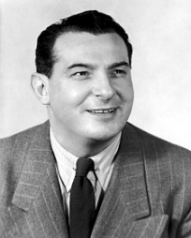
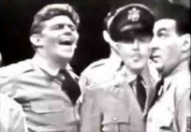
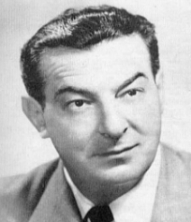
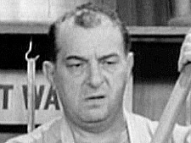
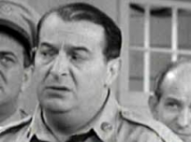
Beatrice Pons
During September 2012 the Society received an email from a fellow Phil Silvers fan who told a fascinating story about a once in a lifetime, chance meeting with Beatrice Pons in the early 1980's.
Although Beatrice was well known and equally well loved by Bilko and Car 54 fans little was known of her life, career and indeed if she was still with us. There had been many cyberspace rumours floating around but none could be verified until now. Here is Andy's recollection of a happy, surreal meeting with a lady who was an integral part of the Bilko cast. In fact along with Elisabeth Fraser and Hope Sansberry she formed a formidable team who held their own against the male contingent at Fort Baxter! Here is Andy Caulton's vivid recollection of meeting Mrs Emma Ritzik!
"It all happened way back in 1983, coaching football (soccer!) in the rural stomping ground known as the Catskills Mountains, New York State. I had happened to miss my cab ride with fellow counsellors and embarked on the 10 mile trek to town when suddenly out of the blue a large car pulls over, and one of the camp directors asks 'Do you want a ride?', I entered the car, and in the back of the car was a fellow passenger who exuded a reassuring air of familiarity. A glamourous lady in her mid 60's. I introduced myself and was immediately smitten by her well spoken response.
The camp director then informed me, 'Andy, you are a very lucky man, do you realise you are sitting next to someone famous?' This led to an embarrassing pause, as I did not recognise my fellow passenger, so politely replied 'I'm sorry, I do not recognize you.' The well spoken lady softly demurred, 'Well it was a long time ago', and at this point the director interjected, 'Beatrice was in 'Car 54 Where Are You.' Instantly the connection was made! Luckily or fatefully, Channel 4 had just shown a season of this classic American sitcom, with the main characters being Rupert and Emma Ritzik reprising the roles they had honed to perfection in The Phil Silvers Show. At this stage I asked 'Oh my, so you were Emma Ritzik?' Beatrice smiled a warm, sweet smile and acknowledged this to be true!
Crazily, on my first trip to America, as a naive teaching student, when traveling to the States was a much bigger deal, I had an unshakeable belief that I'd have the opportunity to meet my idol Phil Silvers at some point during my trip. In reality what really was the chance of that? But incredibly here I was sharing a car with Emma Ritzik! I instantly felt the pressure of 'trying' to get as much information as I could from Beatrice. So many questions, so little time. What were the cast like? 'Very close.' What was filming like? 'Lots and lots of fun.' What was Phil Silvers was like in real life? 'Very kind and an absolute joker, off screen as well.'
At this moment in time it was rumoured mainly by the tabloids that Phil was living a sad existence watching re-runs of Bilko. I asked if this was true, and Beatrice scoffed this idea as utter nonesense dreamt by people who should know better. I'm sure I asked lots more questions, and in the passage of time and in nervous excitement have forgotten them but Beatrice was ever so classy, spoke so clearly and gently, (which made her acting even more remarkable!), and she was genuinely and humbly thrilled to be remembered! So this story is not a figment of my imagination, I 'somehow' (and back in 1983 people carried cameras far less than they do today) but on that fateful day I was lucky enough to be carrying my Olympus camera, and as I got out of the car in Roscoe, NY, I nervously asked for my photo to be taken with Beatrice. As you can see she was very, very generous and happily agreed to pose for the snap!
When I eventually got back to England, I was desperate to watch an episode of Bilko, and on that Friday night, armed with my photo for cross reference, watched an edition, and lo and behold there was dear Beatrice playing Emma! I didn't end up meeting Phil, but boy, how lucky was I to have the opportunity to meet the charming and delightful Beatrice Pons? Happy, happy memories! As a footnote Steve and Mick the beauty is Beatrice on that chance meeting was such a generous, genuine and warm person. I was so lucky! Getting out of the car and knowing Beatrice was so thrilled and happy when I asked for a posed photo. Part of the reason was to record this meeting for posterity, and to remember it was really her! Just fate in every possible way, but the best kind of fate (being out in NY back then, winging my way into a football coaching job, missing my cab ride on my one night off, getting a lift from the camp director!)
I attempted to contact my summer camp recently to 'discover' why Beatrice was visiting camp. Transpires she was a personal friend of the camp director, but little more is known or remembered due to the passage of time. I deem it an honour to have the opportunity to tell my little piece of Bilko history through your fantastic website and it's been lovely to share my chance meeting with Beatrice and tell everyone how utterly lovely and sweet she was!".
All the best,
Andy Caulton
September 2012
Footnote: According to Andy Beatrice passed away in the early 1990's. Some sources cite her date of birth as 26 January 1906 and her death sometime in June, 1991 although this information is still unverified.
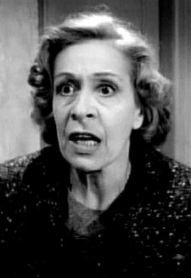
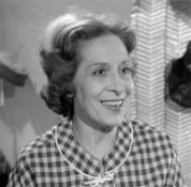
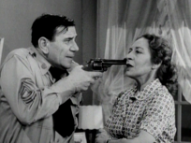
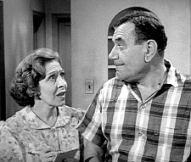
Billie Allen Henderson
Fans of The Phil Silvers Show will remember Billie Allen as WAC Billie, one of the Colonel's office staff. Billie was born Wilhelmina Louise Allen on January 13, 1925 in Richmond, Virginia to Mamie Wimbush Allen and William Roswell Allen. She was raised in Richmond and attended both Randolph Street School and Elba Elementary School before graduating in 1941.
At Hampton University she was inspired by Romare Bearden and mentored by Billie Davis. Drawn to show business, Billie moved to New York City in 1943 to take ballet classes and to study acting at the Lee Strasberg Institute. Her first Broadway appearance was as a dancer in the 1944 hit musical On The Town.
Billie appeared in the film Souls Of Sin in 1949 with Jimmy Wright and William Greaves. In 1953, she performed in the Broadway play, Take A Giant Step with Lou Gossett, Godfrey Cambridge and Lincoln Kilpatrick.
It was in 1955 that she was hired to play the part of WAC Billie in The Phil Silvers Show. Whilst appearing in Bilko Billie also had a role in popular soap opera The Edge Of Night. She also appeared in Nat Hiken's Car 54, Where Are You?.
In 1964 she was cast in Adrienne Kennedy’s Funnyhouse of a Negro, and in 1990, directed the play’s revival. She also portrayed Vertel in the movie Black Like Me in 1964 and appeared on stage in James Baldwin’s Blues for Mister Charlie. In the follwing decades Billie has appeared in numerous films and television programs including Route 66, The Wiz, Winter Kills, The Vernon Johns Story, Eddie Murphy Raw and Law and Order. In the early 1980s she directed the off-Broadway play Home featuring Samuel L. Jackson, and in 2001, she directed Saint Lucy’s Eyes starring Ruby Dee.
Billie is a founding member of the Women’s Project and Productions and also served as founding member and co-president of the League of Professional Theatre Women. In 1973 along with Morgan Freeman, Garland Lee Thompson and Clayton Riley she helped to found the Frank Silvera Writers’ Workshop. She interviewed Rosetta LeNoire, Julia Miles and Ruby Dee for the theatre archives of the Library of the Performing Arts at Lincoln Center, and in 1999 and 2000, served as a voting member of the Tony Awards nominating board.
In 1981 Billie married composer/arranger Luther Henderson. In 2002 the couple won the Pioneer Awards at the Audelco VIV Awards. Sadly, Luther passed away in 2003 following a lengthy illness. Today Billie lives happily in New York. She has two children from a previous marriage.
I recently had the great pleasure of speaking to Billie and she was happy to talk about her life, her career and her time on The Phil Silvers Show. Here is an excerpt from our conversation.
"I was born in 1925 in Richmond, Virginia. My parents, especially my mother, took me to see everything when I was a little girl - plays, musicals, ballet. I remember once a show from Monte Carlo came to town and I recall us going to see a wonderful touring opera company. We'd go to see them all. So I kind of gravitated towards performing.
My parents were both in the medical profession and always busy so the time we spent together was precious. The routine was that every summer I went to camp for six weeks. Then when that finished I'd go to my mother in New York and she'd take me to see shows, plays, take me to ballet class....and it was wonderful. She enjoyed doing it and I enjoyed her taking me.
When I got older I told my parents that I would go to med school, to be a paediatrician, because that was more acceptable to them. But what I really wanted was to perform. I knew deep inside that I was going to do theatre.
I began as a dancer in musicals and my first job was in On The Town. I'd studied in most forms of dance...ballet, tap and modern so I was well prepared. After that I got some regular theatre and drama work and then I got a call from CBS. I went to their offices and it just felt like I was surrounded by people and I thought this is not for me so I left.
Later I got a call from CBS and they said Nat Hiken wanted to see me. I'd never heard of him but I went along anyway. I met him and he was very sweet. He told me about his show and that he wanted me to join the cast.
I had the most wonderful time on the show. Both Nat and Phil were very kind to me. I learned so much from Nat about how to direct and Phil was just about the sweetest man I ever knew. He was very shy....the other boys would go to lunch but Phil would stay behind....One day he told me that I was gonna make it and he was right.
It was such a fun, happy time. It didn't feel like work. Phil was so nice to all us girls and looked after us. He was took a real interest in everybody. It was one the happiest things I ever worked on!
When the show finished we kept in touch for a while. He'd call me to make sure I was working and to see if I needed anything. A lovely, lovely man. I worked with Nat again when I did a few episodes of Car 54, Where Are You?
As a performer I've done musicals, comedy, drama - on television, in movies and on stage. I've also done some directing which I really enjoyed and I've been involved in many, many aspects of theatre.
I've had a wonderful life and a wonderful career and I'm very, very happy!".
Billie Allen Henderson
Billie Allen Henderson died peacefully at her home in New York City, on December 29, 2015, at the age of 90. She was survived by her son and daughter.
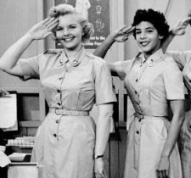
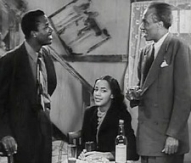
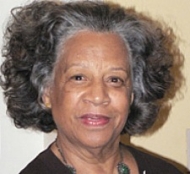
Herbie Faye
Herbie Faye is perhaps best know to television audiences as the world-weary Corporal Sam Fender in The Phil Silvers Show. Fender is the eternal pessimist weighed down by his wife and six children and forever believing that Bilko is about to put one over on the Motor Pool platoon.
He was born Herbert (Hirsh) Falick, the son of Jewish/Romanian parents on February 2nd 1900 in the notorious district of Manhattan known as Hell's Kitchen. It was renowned as a particularly tough neighbourhood of New York and quickly became synonymous for its gangsters, violence and murders.
As an escape from everday street life he soon developed a love of theatre and films and following a brief spell in the Army, during which he organised the camp entertainment, and following his marriage in 1918 to Bobbie Caputo he wound up working on what became known as the Borscht Belt in the Catskills Mountains in upstate New York.
By 1926 Herbie (often billed as Herbert until the mid 1930's) was appearing on the vaudeville/burlesque circuit with his own troop of performers which included wife Bobbie. With fellow troopers Bert Morrissey and Flo Donia the act performed a skit called Laughology and toured across the US, appearing variously at the Earle Theatre in Washington, the Palace Theatre in Indiana and the Tilyou Theatre in New York.
After appearing in a production called Paris To Long Beach with Frank Farnum and Alice Ridner in June 1930 Herbie was approached by a young, up and coming comic called Phil Silvers. Phil had recently quit the hugely successful vaudeville act Morris & Campbell, in which he had played the role of a brash kid and was looking to form a new act.
By 1931 Herbie and Phil found themselves in an act called Charlie Chaplin's First Wife with Mildred Harris. Harris was a former silent movie star whose career had floundered with the introduction of talking pictures. In 1918 she was indeed married to Charlie Chaplin although the marriage didn't last and the couple divorced in 1920.
Keen to revive her flagging career Harris agreed to appear in the novelty act. Sadly it was not to last and following a disatrous performance at the Star & Garter Theatre in Chicago during which Harris performed a striptease the production was closed down due to complaints of indecency and the act was disbanded.
Herbie quickly put together a new act with Phil based on an old burlesque sketch called She Won't Take It. It was at this point in his career that Herbie had progressed through the vaudeville ranks to become First Banana (the star comedian in a burlesque or vaudeville show) and Phil at this time was merely a fledgling Second Banana.
This new sketch was a revelation to Phil. Those long years treading the boards had seen Herbie develop into a supreme comic and he became know on the circuit as the master of double-takes, triple-takes and the slow-burn. He knew the business of being funny inside and out. "I was as stiff as a scenery brace, and I didn't have a clue what I was supposed to be." said Phil, "Herbie nursed me, cajoled me, taught me the fundamentals of stage comedy. I loosened up, became more creative. I improvised instantly on my feet!"
Their friendship lasted for the whole of their personal and professional lives and although Phil eventually rose to the position of First Banana and his fame and notoriety far exceeded that of Herbie's, and their paths would cross many times over the years he always considered Herbie as his mentor.
By the end of 1933 Herbie and Phil had parted company and Herbie was performing as a solo comic alongside Joe Mandel, Ethel Parker and Sandino in a show called Chow Chow whilst also continuing to perform Laughology with his old company.
He spent the next several years appearing at vaudeville/burlesque venues across America. In 1935 he appeared in two productions at the Gayety Theatre in Washington - Dangerous Curves with Sunya Slane and Fred Bishop and Rainbow Girls which saw him as top of the bill. Vaudeville/burlesque theatres were by now on the decline and as such the nature of the acts was changing. Variety was now the buzz word and performers began to take their acts in to the more traditional theatres and venues of the day.
In 1942 having adapted many of the old routines for a more discerning audience Herbie was performing across the United States in a production called Strip For Action with Eleanor Lynn. This was more in the tradition of a variety show with music, song and dance.
Herbie performed many of the old burlesque routines including The Pickle Bit, The Letter Bit and The Box Number. In between shows he would relax and unwind by playing golf or developing his talent for photography and he eventually became an accomplished golfer and a keen photographer.
Sadly his next show Wine, Women & Song (billed as a revue-vaudeville-burlesque show in two acts) which ran at the Ambassador Theatre on Broadway was closed (echoing the Mildred Harris incident) after 150 performances due to claims of indecency. Between 1942 and 1945 Herbie performed on numerous USO tours with Phil during which they performed many of their old vaudeville skits.
With the death of vaudeville it was inevtiable that a move into television would be the next logical step for Herbie. In 1950 he made his TV debut in Cavalcade Of Stars, a variety show hosted by Jerry Lester. When Lester later quit the show would be hosted by Jackie Gleason and in 1952 was retitled The Jackie Gleason Show.
He re-teamed with Phil Silvers in 1951 when he appeared in the smash Broadway musical Top Banana (The title was lyricist Johnny Mercer's play on the old vaudeville First Banana shtick), a musical comedy written by Hy Kraft and based on television's leading comics of the day.
Phil sought help from old friends who were familiar with the burlesque routines that would feature in the show and his first choice was Herbie. He also hired Joey Faye (no relation) and Jack Albertson both of whom he'd previously worked with.
Top Banana opened at Broadway's Winter Garden Theatre on November 1, 1951 and was an instant hit. It ran for a total of 350 performances before closing on October 4, 1952. The show then went on an extensive road tour of the United States, culminating in Los Angeles in late 1953.
1954 saw the release of a film version of Top Banana in glorious 3D. The film utilised all of the sets, costumes and most of the cast. Actress Rose Marie was brought back to perform her original role, replacing Kaye Ballard who had taken the role in the road company production. There were some minor rewrites of dialogue and action and some of the supposed profanity was toned down in order to meet censorship requirements. A strip-tease number was also toned down.
Herbie renewed his professional association with Phil in early 1955 when he joined the cast of The Phil Silvers Show as Corporal Sam Fender. He would eventually appear in 140 episodes and the one hour special Keep In Step. The only other actor to appear in more episodes was Phil Silvers himself!
Throughout the 1960's Herbie went on to carve out a remarkable career as a hugely successful character actor and comic performer on such shows as The Tom Ewell Show (1961), The Untouchables (1962), The Many Loves Of Dobie Gillis (1963), The Twilight Zone (1963), My Favourite Martian (1965), The Munsters (1965), Bewitched (1966) and I Dream Of Jeannie (1968). He also made several appearances on the big screen in Come Blow Your Horn (1963), The Thrill Of It All (1963), The Ghost & Mr. Chicken (1966) and Blackbeard's Ghost (1968). In 1969 he appeared in The Love God written by his old friend and Bilko alumni Nat Hiken.
He was re-united on screen once again with Phil Silvers in the 1963 television series The New Phil Silvers Show when he was cast as Waluska. Sadly the show failed to connect with audiences in the way that Bilko had and was cancelled in April 1964.
1964 would prove to be an extremely eventful year for Herbie. On June 21 he married for a second time. His bride was Mary Lou Johnson whom he'd met at the Brookside Golf Course coffee shop following a golfing session. Phil and Evelyn Silvers served as best man and matron of honour and the ceremony was performed at Phil's Beverly Hills home.
A champagne supper followed and was attended by guests including columnist Hedda Hopper, Phil's long-time friend and sometime co-star Polly Bergen and The Three Stooges! Shortly after the marriage Herbie and Phil were back on the road in a Summer Stock production of Top Banana which ran at State Fair Summer Theatre in Dallas, Texas from August 3rd to the 16th.
As he entered his 70's Herbie showed no signs of slowing down and appeared on television in Love American Style (1972), Here's Lucy (1972), The Mary Tyler Moore Show (1973), Happy Days (1974) and the hugely popular The Odd Couple (1975). However by the mid 1970's his health began to falter and with wife Mary Lou he moved to Clark, Nevada to enjoy the warmer climes.
But even in poor health the desire to perform persisted and he returned to both the small and big screens for one last hurrah. In 1979 he appeared in an episode of Quincy called House Of No Return in which Quincy (Jack Klugman) investigates a death at a home for people who have commited crimes but are considered mentally incapable and cannot be sent to prison. On the big screen he had a small role as witness at a wedding in Jonathan Demme's feature film Melvin & Howard (1980), a comedy drama based on the real-life story of Melvin Dummar who was listed as the beneficiary of $156 million in a will purportedly written by eccentric billionaire Howard Hughes (Jason Robards).
To commemorate his 80th Birthday in February 1980, a surprise intimate gathering was thrown in his honour at his home in Nevada. Organised by Mary Lou it was a gathering of several of his old Bilko co-horts: Phil Silvers, Allan Melvin, Harvey Lembeck and Billy Sands all gathered at his home to join in the celebrations and it proved to be a fun-filled and emotional occassion.
Herbie Faye sadly passed away on June 28th, 1980 aged 80.
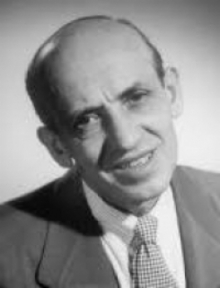
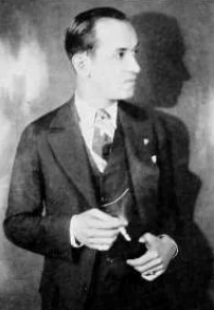
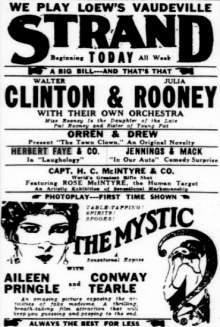
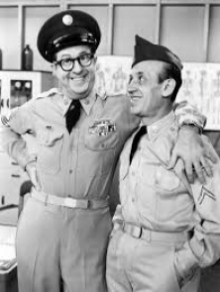
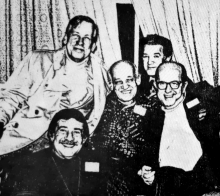
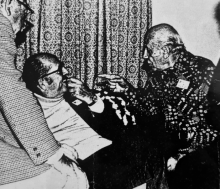
P. Jay Sydney
P. Jay Sydney was an African-American screen and theatre actor, who later became a prominent activist who fought for equal representation of African-Americans within the US entertainment industry. He is perhaps best remembered by fans of The Phil Silvers Show as Pvt. Palmer, a faithful member of Bilko's Motor Pool Platoon.
He was born Sidney Parhm Jr. on April 8th, 1915 in one of the poorest districts of Norfolk, Virginia. His mother died when he was a child and his father moved the family to New York in pursuit of a better life. Sadly his father died when P. Jay was just 15 years old and subsequently he was placed into foster care.
An excellent student, he graduated high school while still 15 years old, then attended New York's City College for two years. City College was the first free public institution of higher education in the United States. However he did chose not to complete his college course electing instead to leave in to pursue a career in acting and theatre.
He soon began to pick up small parts in theatrical productions in and around New York and in 1934 he gained a role alongside Lena Horne in Dance With Your Gods. His stage career blossomed with appearances in Androcles & The Lion (1939), Big White Fog (1940) Run Little Chillun (1943) and Carmen Jones (1943).
He also built a solid radio career, producing a series called Experimental Theatre of the Air which introduced the then radical choice of casting voices without regard to racial categories and predjudice.
During the 1950's he made numerous appearances on television including Shadow Of The Cloak (1951), Hallmark Hall Of Fame (1952), The Joe Louis Story (1953) Danger (1954) and You Are There (1955).
He attended an open casting call for Nat Hiken's new show and it was here that he was offered a role in You'll Never Get Rich, which later became The Phil Silvers Show. Alongside Frederick O'Neal and later Terry Carter he was one of several African-Americans featured in the cast. It was a move that was initially opposed by the shows sponsors, fearing that their inclusion would alienate Southern audiences. Nat Hiken and Phil Silvers were steadfast in insisting they be allowed to remain on the show and both were prepared to walk away from the project if the sponsors pursued their actions.
During the 1950's P.Jay carved out an impressive career with parts on shows like As The World Turns (1956), The Big Story (1956), Camera Three (1958) and he had made a notable appearance as Cato in The Plot To Kidnap General Washington (1952). He also enjoyed a lucrative career with his voice-over work. While he enjoyed the diversity and inclusivity of his role as Palmer on The Phil Silvers Show he became disillusioned with the type of parts he was being offered. "It was all doormen or waiters." he said, "I had a whole goddammned career of 'Yassuh? Can I git you another drink suh?"But I did what was available. I did not mix my feelings with the fact that I needed money to live."
In 1954 he married Carol Foster, a well-educated daughter of a dentist. She had moved to New York to be a French translator, but dreamed of being an actress, however P.Jay was unsupportive of his wifes acting ambitions. “He knew I had these aspirations, but he said,‘One actor in the family.’ I, being a timid little thing, said, ‘Yes, dear.’ ” They had a tumultuous marriage, and eventually separated, although they did not officially divorce until 1977. Carol Foster Sidney later did become an actress with a successful 10-year career in New York.
As he entered the 1960's P. Jay became ever more prominent as an activist. He picketed CBS, the advertising agency BBDO, and others, passing out flyers highligting the injustices and inequalities in the entertainment industry. He even paid for ads in the Times advocating a boycott against the sponsor Lever Brothers, which used black talent only in ads aimed at blacks. “It was his life,” Foster Sidney said. “There was nothing else he wanted.”
“I was concerned about the image of black people in television.” he said, “By not including Negroes in at least approximately the numbers and the roles in which they occur in American life, television and radio programs that purport to give a true picture of American life malign and misrepresent Negro citizens as a whole.” It was this very argument that Silvers and Hiken had fought so hard for in the early days of The Phil Silvers Show.
In 1962, he testified before the House, arguing against “discrimination that is almost all-pervading, that is calculated and continuing.” He described two-faced producers, who used a nepotistic, friend-of-a-friend hiring approach, saying, “for most white people, Negroes are not actors, or doctors, or lawyers—not really—but are rather, all members of a secret lodge, domiciled in Harlem or some other Colored Town—all knowing each other and all experts on one another.”
His last major film appearance during the 60's came in the 1964 film Black Like Me in which a white reporter, played by James Whitmore, disguises himself as a person of colour in order to report on life in a segregated society from the other side of the colour line.
In 1967, Variety reported that Sidney had quit a job on popular US soap “As the World Turns,” protesting the soap opera’s policy of not offering black actors contracts, as it did white actors. In 1968, he was quoted in the Times on whether the representation of black people in ads had improved. “It was like a man who’s been gravely ill with a temperature of 104 if it drops to 102 it’s better,” he said. “But, if the question is,‘Has the progress been commensurate with the need?’ The answer is ‘No.’ ”
As the years passed, the doors remained closed. Despite the protests and the lobbying TV was still run by white people, emphasizing white lifestyles. Sidney had bought a brick house in the Prospect Lefferts Gardens neighborhood of Brooklyn, where he retreated. In 1988, the Amsterdam News lamented the minuscule presence of black TV producers and writers, adding that Sidney’s activism had had as much effect as “ice cubes at the South Pole.”
In 1983 he had a small role in Trading Places alongside the up and coming young comic Eddie Murphy who, ironically was smashing down the doors of racial acceptance that Sidney himself had so long been knocking on.
P Jay Sidney made one last significant smallscreen appearance, in the 1987 TV movie A Gathering of Old Men. But little had changed and here he was once again playing the kinds of parts he'd fought so valiantly to escape. In his final movie, A Kiss Before Dying in 1991, he played a bellman.
Following a battle with prostate cancer P Jay Sidney passed away in Brooklyn, New York on September 30th, 1996 at the age of 81.
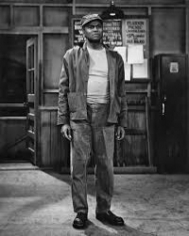
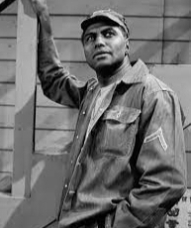
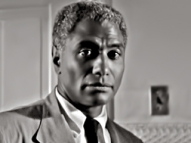
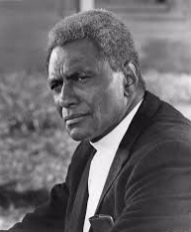
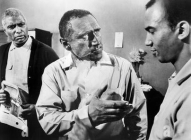
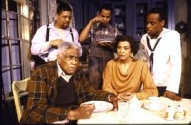
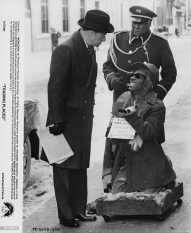
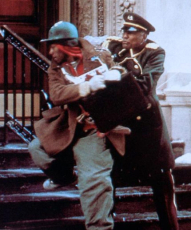
| Visitor Counter: | |||||||
 |  |  | |  | | ||